Covered terrace and uncovered terrace: two different logics
The presence or absence of a roof covering determines the technical constraints and available options. Under a pergola or canopy, fittings are partially protected from direct adverse weather — IP44 may suffice depending on the configuration. In open air, every fitting must withstand Belgian rain, frost and significant thermal fluctuations: minimum IP65, IP67 for recessed ground spots.
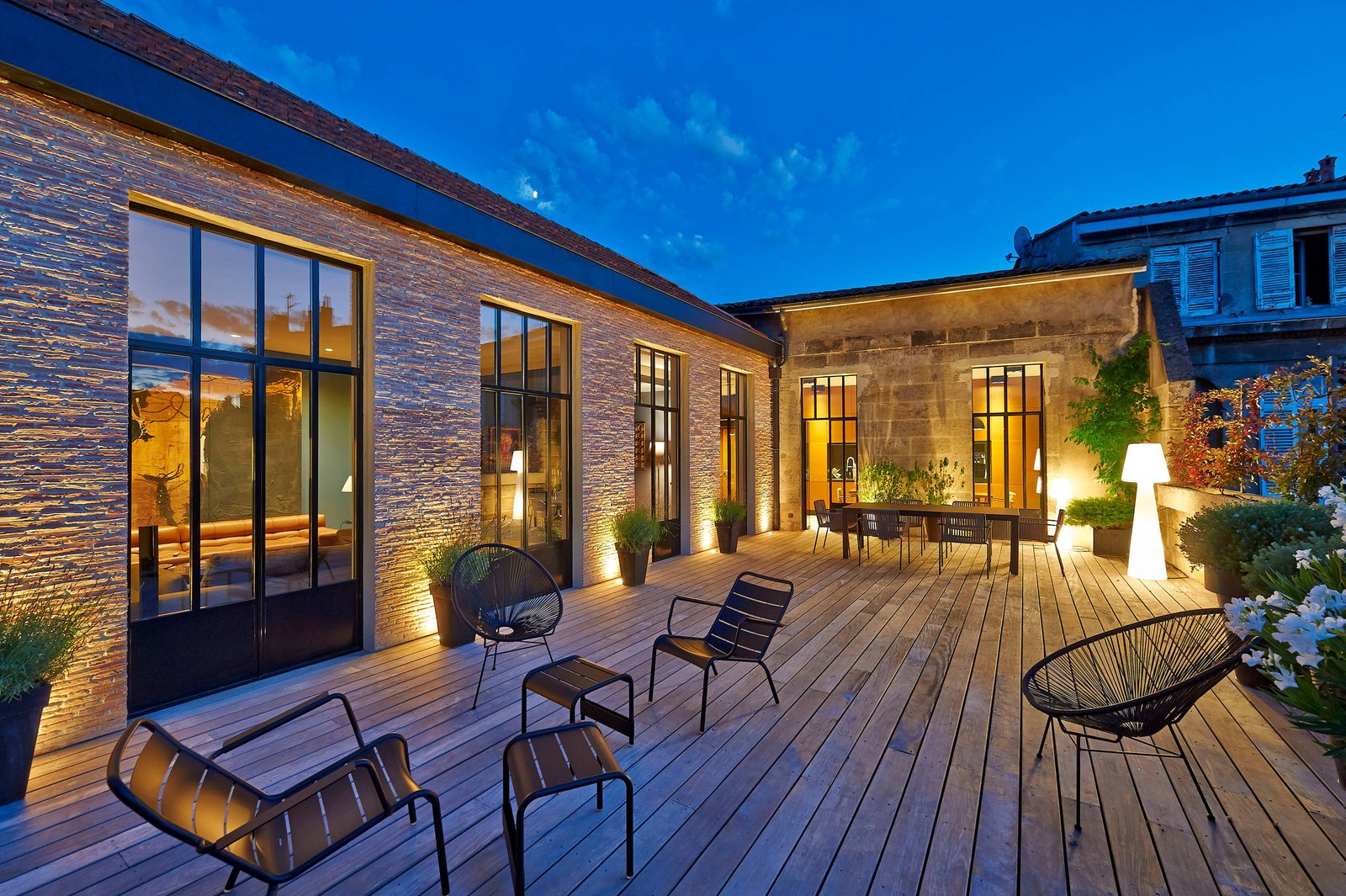
Architectural integration also differs. A covered terrace allows sources to be recessed into the structure (beams, suspended ceiling, profiles), pendants to be installed and light to be managed as an extended interior space. An uncovered terrace relies more on ground-level sources, bollards and adjustable floodlights anchored in the masonry or slab.
Sources and illuminance levels by use
| Use / zone | Target illuminance | Colour temperature | Source type | Min. IP |
|---|---|---|---|---|
| Dining / meals | 150-300 lux | 2700-3000 K | Outdoor pendant or adjustable spot | IP44 (covered) / IP65 (uncovered) |
| Relaxation / lounge | 50-100 lux | 2700 K | Low bollards, indirect LED strip | IP65 |
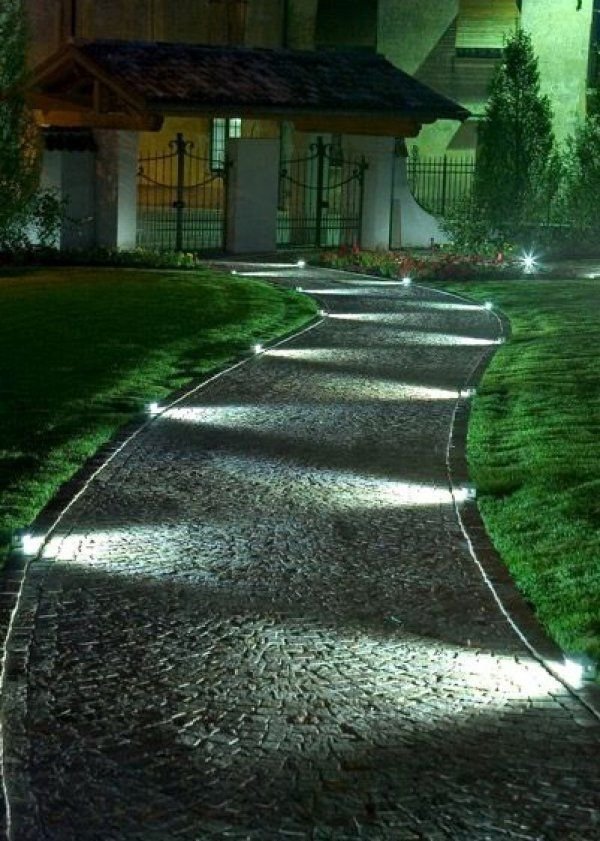
| Circulation / safety | 50-75 lux | 3000 K | Recessed ground spots, wayfinding bollards | IP67 |
| Planting / decoration | Directional accent | 2700-3000 K | Spike floodlights or recessed ground spots | IP65 |
| Balustrade / handrail | Indirect, ambiance | 2700 K | Waterproof LED strip aluminium profile | IP65 |
Dimming and light scenes: switching from one use to another
A versatile terrace benefits from a control system that allows switching between multiple scenes without manually adjusting each source. Two levels of integration are common depending on the project and budget.
- Simple dimmer : weatherproof wall dimmer or integrated into the distribution board, overall intensity control — an economical and reliable solution
- Programmable scenes : multiple independent circuits (ambiance, dining, safety) activatable via scene switch, remote control or smartphone
- Home automation integration : for projects where the terrace is part of a global management system (KNX, Zigbee, Matter), coordination with the home automation installer
Integration into the building fabric: avoiding visible cables
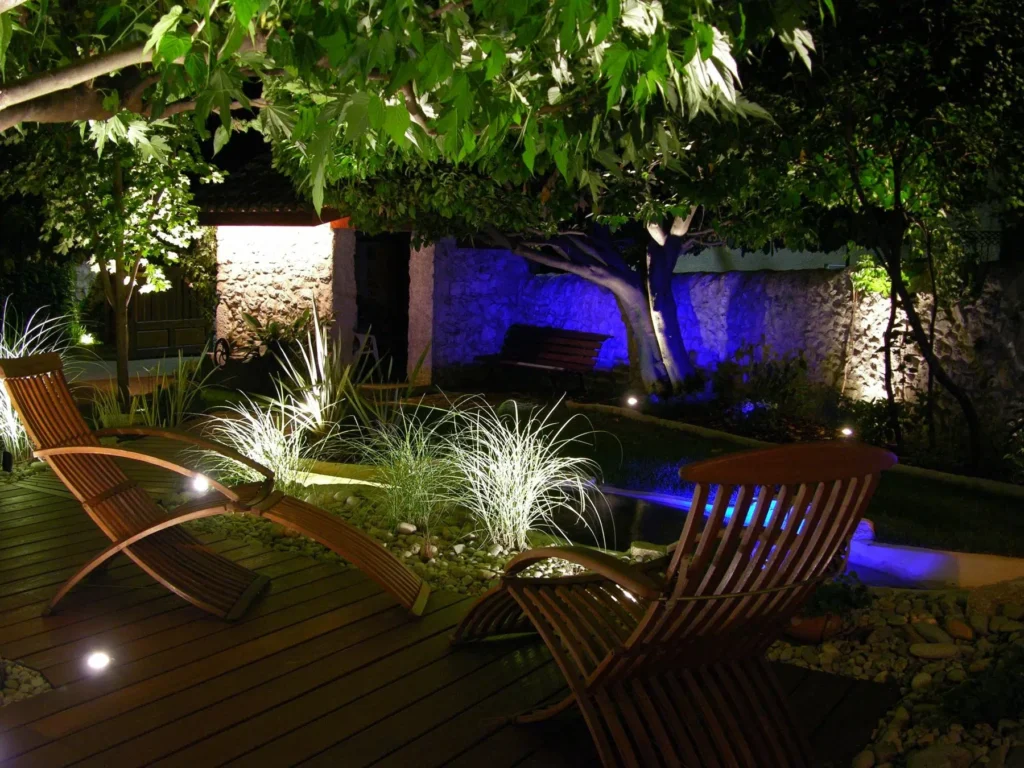
The quality of a terrace installation is also judged by what you cannot see. Visible cables, surface-mounted junction boxes and exposed conduit runs degrade the visual result as much as a poor fitting choice. We define the cable routing before finishing works, to integrate cable runs into the slab, profiles or pergola structure.
Frequently asked questions
Can recessed spots be installed in an existing terrace slab?
Yes, subject to conditions. Sufficient thickness is needed for the cut-out and recessed housing, access to route the supply cable and careful waterproofing around the cut-out. On a solid slab without a crawl space, we assess feasibility case by case. A clean alternative is an adjustable spike floodlight planted at the edge of the slab, which requires no drilling.
Do terrace fittings withstand Belgian winters?
Correctly encapsulated LED sources handle Belgian sub-zero temperatures without issue. The concern is rather the seals on recessed ground spots, which can degrade through repeated freeze-thaw cycles. We select fittings with replaceable seals and for which the manufacturer explicitly guarantees frost resistance.
Conclusion
A well-lit terrace is a fully-fledged additional room, usable from aperitif through to dinner, from spring to the first frosts. The key is integrating the sources at the design or renovation stage to avoid visible compromises and guarantee the durability of the installation.
If your project also includes a garden or green spaces to be lit, see our page garden lighting. For driveways and outdoor access areas, our page driveway and courtyard lighting covers these zones. To scope your project, our personalised study is the right starting point, or express advice for an initial orientation.