
The entrance as threshold and signal
A well-lit entrance does two things at once: it welcomes and it orients. It needs to be bright enough to see where you put things down, warm enough to make the transition from outside pleasant, and coherent enough with the rest of the home to avoid a visual break at the very first step.
It is often the most overlooked space in residential projects, treated with a standard ceiling fixture and a generic bulb. Yet it is the only space every visitor passes through without exception, and the one that shapes the perception of the entire home.
The most common mistakes
- Single central source: casts shadows on faces, poorly suited to entrances with volume or level changes
- Colour temperature too cool: 4000 K or above in a residential entrance gives the feel of a building lobby, not a home
- No dimming: an entrance that switches on at full power at 11 pm disrupts the transition to sleep
- Forgotten exterior threshold: an unlit porch creates a blind zone between the street and the entrance, a safety and usability issue
Solutions by entrance configuration
| Configuration | Main constraint | Colour temperature | Recommended solution |
|---|---|---|---|
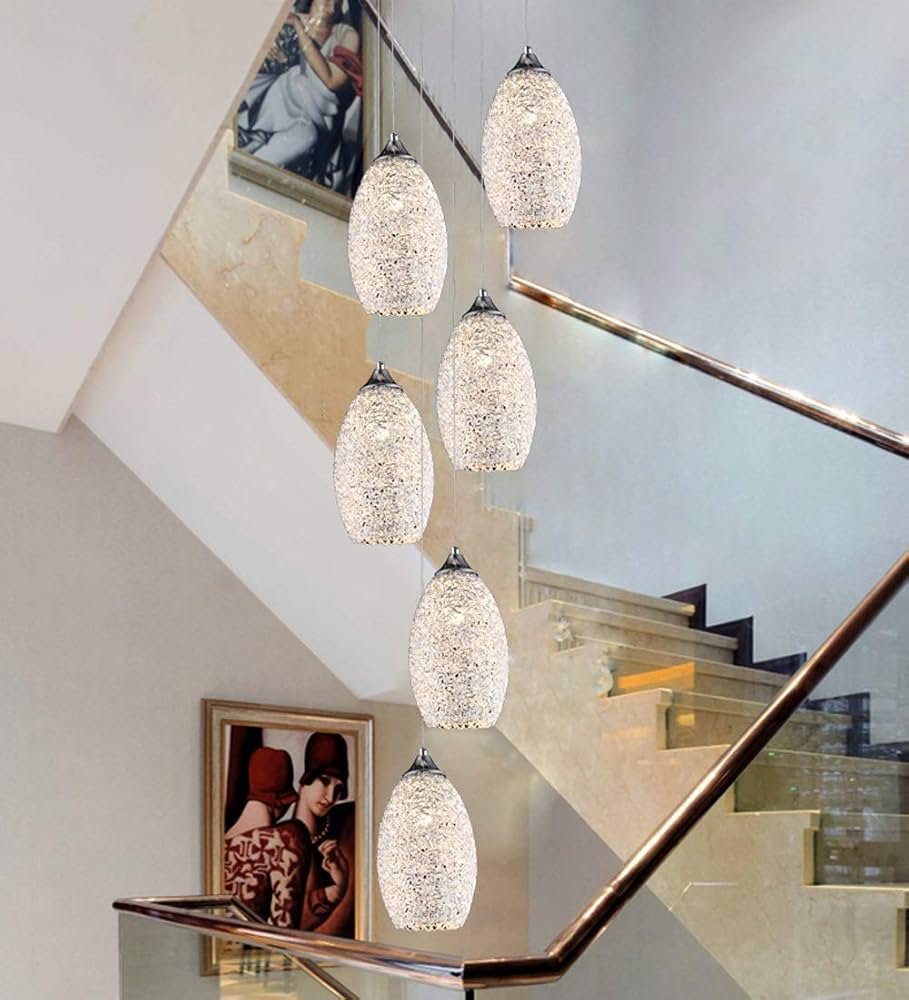
| Spacious hall with height | Volume to enhance, premium materials | 2700–3000 K | Pendant + adjustable accent spotlights |
| Compact flat entrance | Limited floor area, standard ceiling height | 3000 K | Central downlight + mirror wall light if present |
| Entrance with long corridor | Uniformity, no dark zones | 3000 K | Aligned downlights, lateral wallwasher |
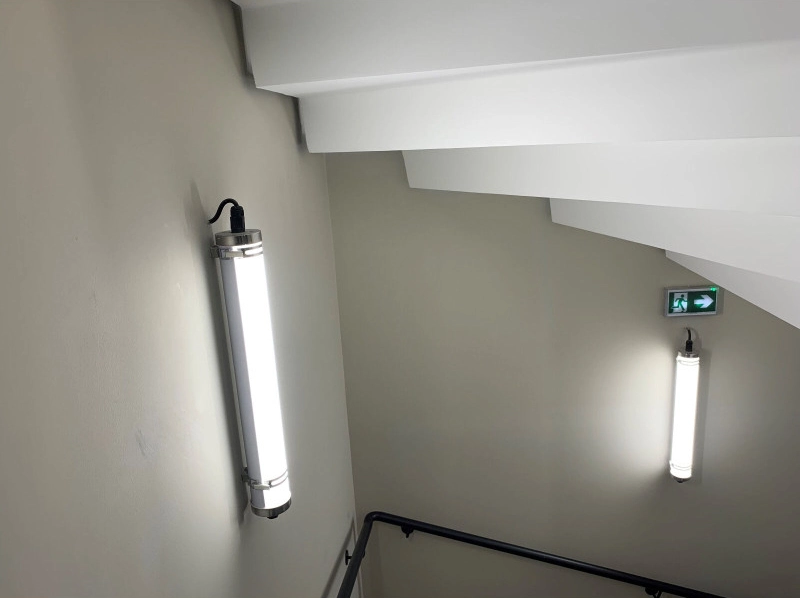
| Entrance with visible staircase | Visual continuity to the upper level | 2700–3000 K | Coherence with staircase lighting, same palette |
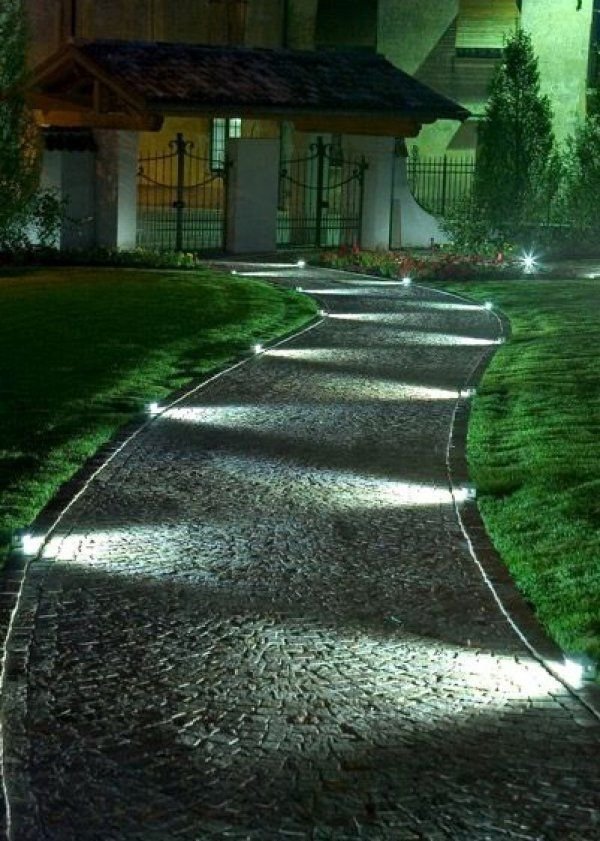
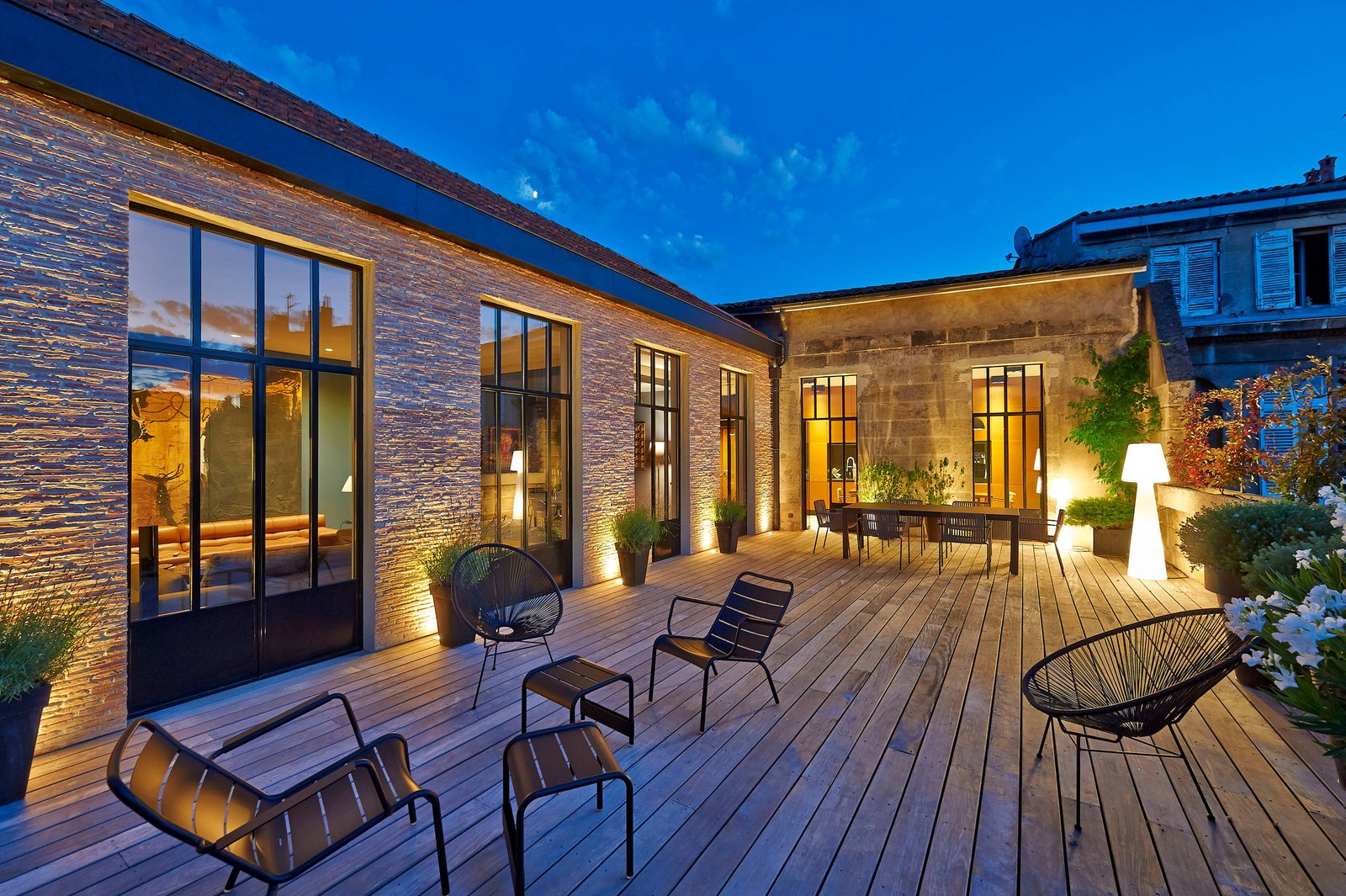
| Porch and exterior threshold | IP rating, safety, detection | 3000 K | IP44–IP65 wall light, presence detector |
Coherence with the rest of the home
The entrance is the starting point for the home's chromatic coherence. If it sits at 3000 K while the adjacent living room is at 2700 K, the transition is noticeable and slightly uncomfortable. We define the colour temperature palette for the entire home from the design phase onwards, using the entrance as the first reference point.
The same logic applies to light levels. A very bright entrance that opens onto a softly lit living room creates a difficult adaptation effect. The goal is a natural progression, with smooth transitions between spaces.
Control and automation
- Presence detection: automatic switch-on on arrival, timed switch-off, no manual operation needed at the entrance
- Night-time dimming: reduced level for nocturnal movement, without disturbing the rest of the home
- Centralised entrance control: a scene switch or "leaving home" button that turns off the entire home from the entrance
- Doorbell and video-entry integration: on certain projects, coordination with porch lighting for automatic switch-on when the bell rings
Frequently asked questions
Can entrance lighting be improved without major works?
Yes, in most cases. Replacing a standard ceiling fixture with a low-profile downlight, adding a lateral wall light, or installing a presence detector compatible with the existing wiring are all light-touch interventions. Where the entrance has an accessible distribution board, adding a dimmer to the existing circuit is often possible without reopening the walls.
What lighting works for an entrance with no window?
An entrance with no natural light relies entirely on artificial lighting for its atmosphere. The temptation is to compensate with high output, which produces a harsh result. We favour several low-output sources spread across different planes, with a warm colour temperature (2700–3000 K) and a high CRI, so that materials and colours render pleasantly despite the absence of daylight.
Conclusion
The entrance deserves as much attention as any living space. It is often where the first impression of a home is formed, and it sets the chromatic coherence for the whole. A careful treatment, even on a small footprint, radically changes how the home feels.
For associated circulation spaces, see our flat lighting or house lighting pages. For exterior access, our driveway and courtyard lighting page covers the threshold and surrounds. Our personalised visual study always integrates the entrance into the overall vision for the home, or start with an express advice session.