A butcher fits new LED spotlights, brighter and more efficient. Three days later, customers say the meat looks “tired”. Nothing has changed in the chilled counter except the light. The culprit has a name that few data sheets highlight: the R9 index.
In a shop, the amount of light is not enough: colour accuracy is what sells. CRI measures that accuracy on average, R9 measures saturated red, which CRI ignores. For retail, aim for a CRI of at least 90 and a high R9 whenever red matters.
What CRI really measures
The colour rendering index, written CRI or Ra, compares how a light source renders eight reference colours with an ideal source of the same colour temperature. The score goes up to 100. The higher it is, the more natural colours look.
A common misunderstanding: a CRI of 90 does not mean that 90% of colours are accurate. It is an average of deviations. A lamp can post a good overall score and still render one particular shade very poorly.
Those eight test colours are all soft and lightly saturated: beiges, pale greens, greyish blues. A high CRI therefore guarantees faithful pastel tones. It says nothing about vivid colours.
CRI should not be confused with colour temperature either. A warm white at 3000K can have excellent or very poor colour rendering. Our article on choosing the right shade of white covers that other setting.
R9, the index data sheets forget
R9 measures how a strong red is rendered. Beyond the eight basic colours, the method includes saturated colours, and the ninth is that red. It is not part of the CRI calculation, and that is exactly where many LEDs fall short.
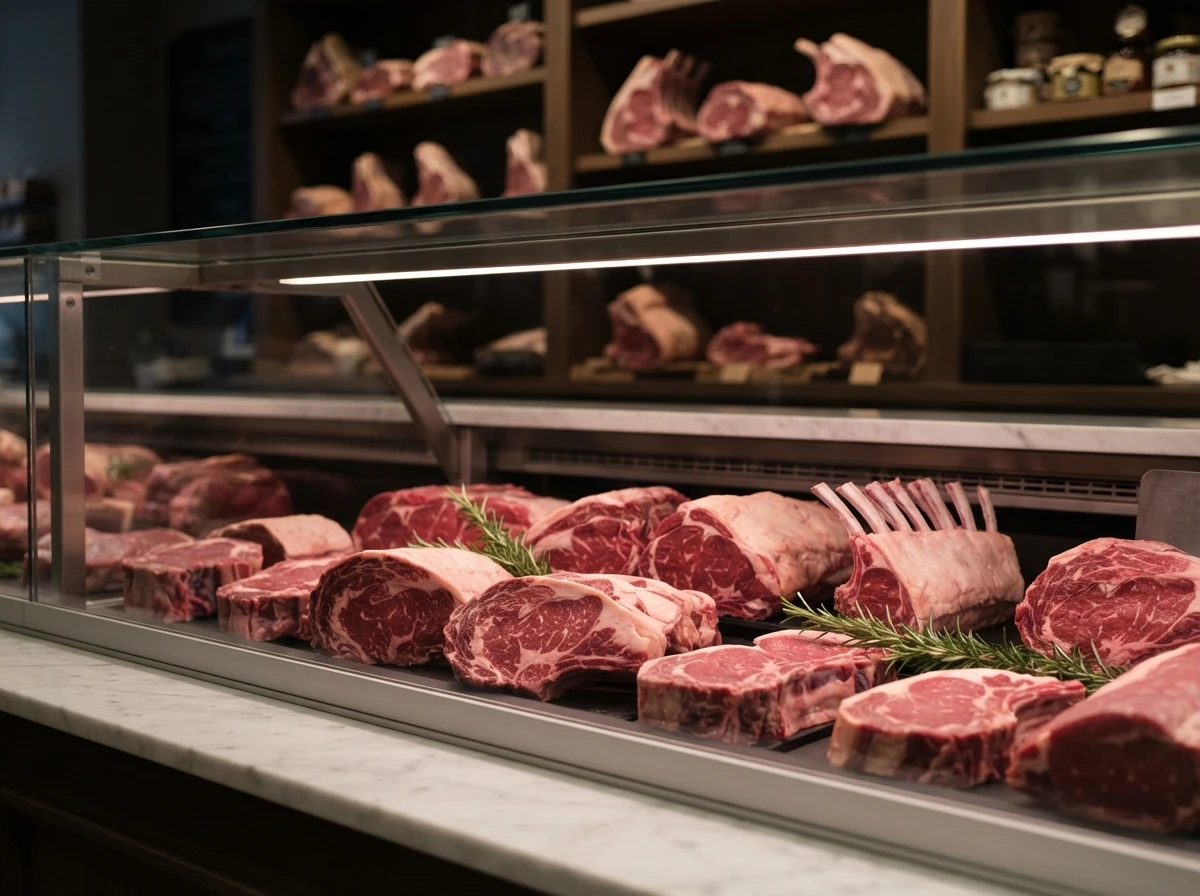
A standard white LED emits little deep red. As a result, a product rated CRI 80 can show a very low R9, sometimes even a negative one. On paper, the lamp is fine. In the shop, reds turn brown, skin looks dull and meat goes grey.
Red is everywhere in retail: meat, fruit, wood, leather, fabrics, customers’ skin in a mirror. Ignoring R9 means neglecting the colour that most often triggers a purchase.
What colour rendering changes from one shop to another
The right level depends on what you sell: the more colour drives the purchase, the higher the bar.
Butchers and food retail
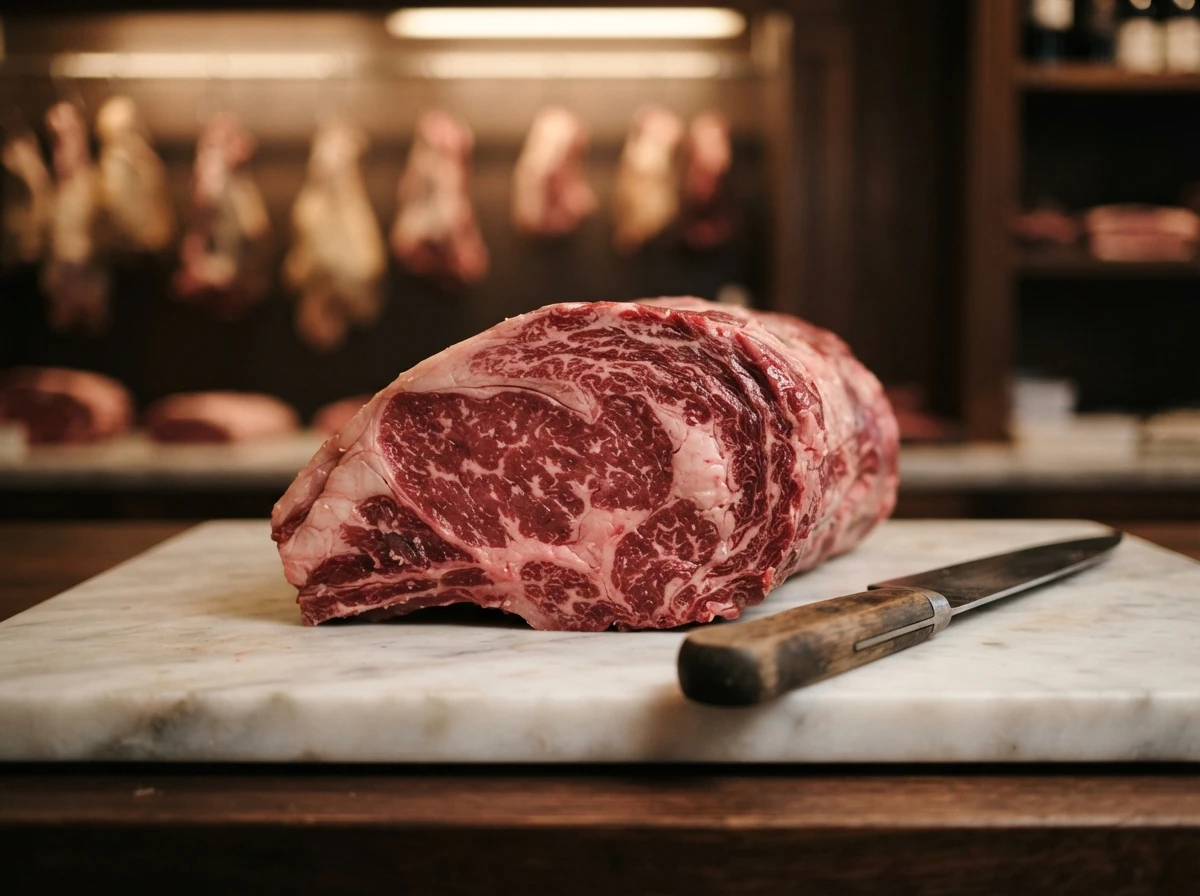
Bright red meat sells, dull meat stays in the counter. A high R9 gives reds back their depth, and a spectrum tuned for meat can enhance them without distorting them. The limit is sources that turn everything pink: customers discover the real colour at home, and trust suffers.
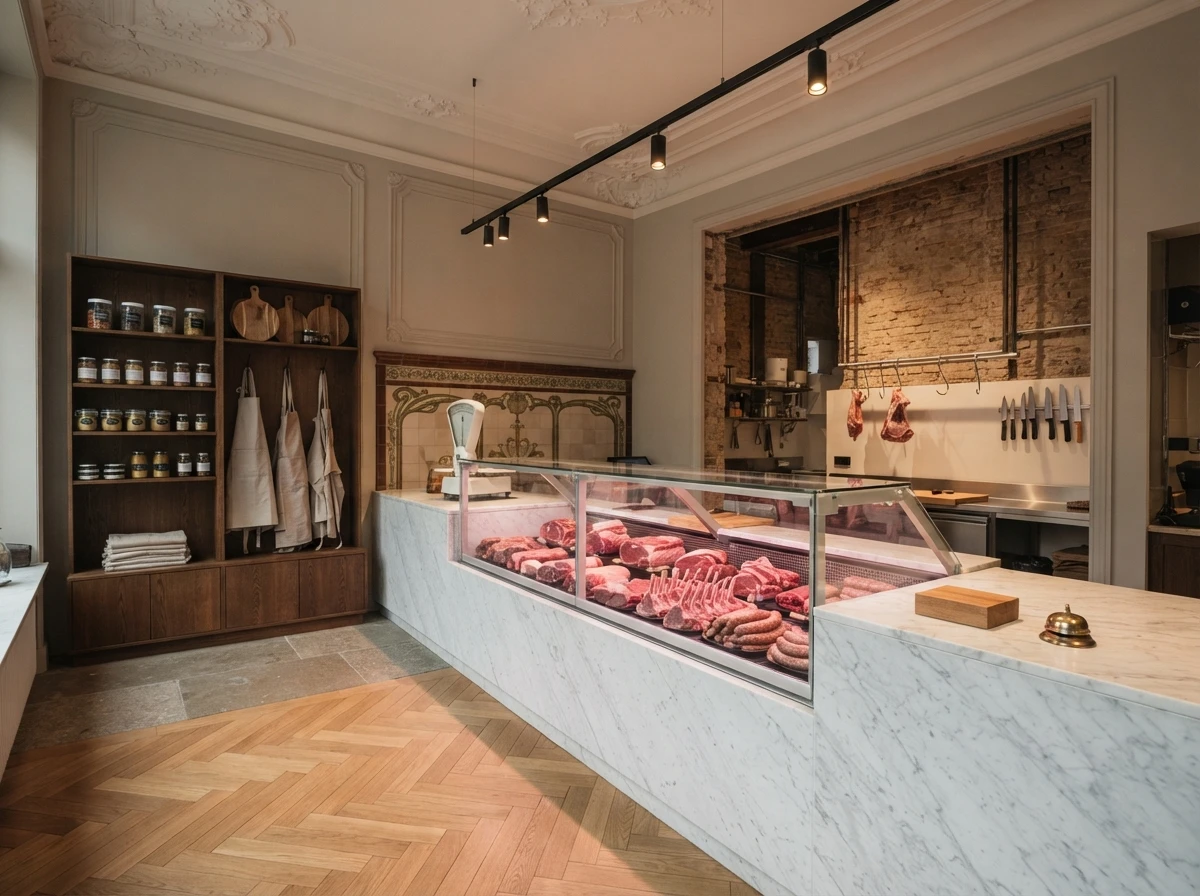
At Jean-Pierre Butchers in Brussels, Rodalight replaced fluorescent lighting with LED spotlights on tracks, with a spectrum tuned for meat and charcuterie. The spotlights can be aimed to suit each delivery and the intensity adjusted to opening hours.
Fashion and textiles
Under poor lighting, black and navy blur together and a collection red turns into a muddy burgundy. This is also where returns come from: the garment is not the same colour in daylight. Accurate rendering on the shop floor and in the fitting room limits those unpleasant surprises.
Jewellers and precious objects
Gold needs well rendered warm yellows, rubies and garnets a solid R9. Here colour rendering works alongside sparkle, which we explain in our article on lighting stones and jewellery.
| Type of space | Target CRI | R9 | Watch point |
|---|---|---|---|
| Butcher, delicatessen | 90 to 95 | Priority | Deep reds, no flattering spectrum |
| Fruit, vegetables, bakery | 90 and above | Important | Fresh greens and golden crusts |
| Fashion, footwear, leather goods | 90 and above | Important | Blacks, navy blues, leather |
| Jeweller, art gallery | 95 and above | Priority | Coloured stones, artworks |
| Pharmacy, cosmetics | 90 and above | Important | Skin tones, packaging |
| Stockroom, circulation areas | 80 | Secondary | Adequate visual comfort |
The EN 12464-1 standard sets 80 as the floor for most workspaces. That is a regulatory minimum, not a commercial target.
Reading a data sheet without falling into the trap
A data sheet is read by looking for exact values, not marketing claims. Catalogues like to print “CRI above 80” in large type. Four habits help avoid unpleasant surprises:
- Ask for the exact value: “above 80” covers 81 as well as 89, and the results are nothing alike.
- Insist on R9: if it appears nowhere, it is rarely good. A serious manufacturer will share it on request.
- Check consistency: two luminaires of the same model should give the same white. A visible difference from one spotlight to the next breaks the unity of a window display.
- Test on your own products: a sample placed on your counter or clothing rail tells you more than a table of figures.
To go further, the TM-30 index describes both the fidelity and the saturation of colours. It is starting to appear in the documentation of the most demanding manufacturers.
A high CRI costs a little luminous efficacy. The gap remains small compared with what a poorly presented product loses in sales. Lighting right rather than lighting expensive is also about choosing your priorities.
Conclusion
CRI gives a first indication, R9 tells you whether your reds will hold up. In a shop, these two values matter as much as lux levels. The right level depends on what you sell, on your window displays and on the daylight available.
Before replacing your luminaires, a custom lighting design study lets you choose light sources based on your products rather than a catalogue. See also our approach to retail lighting and our solutions for butcher’s shop lighting.