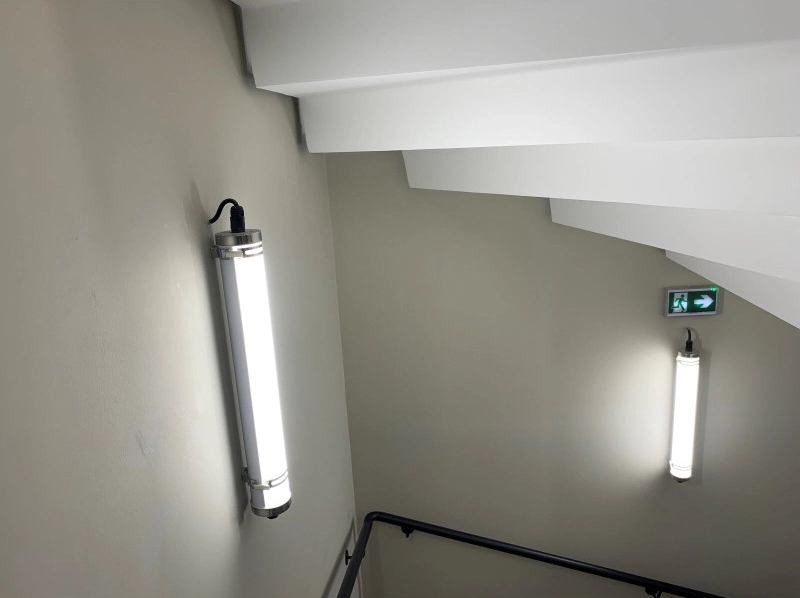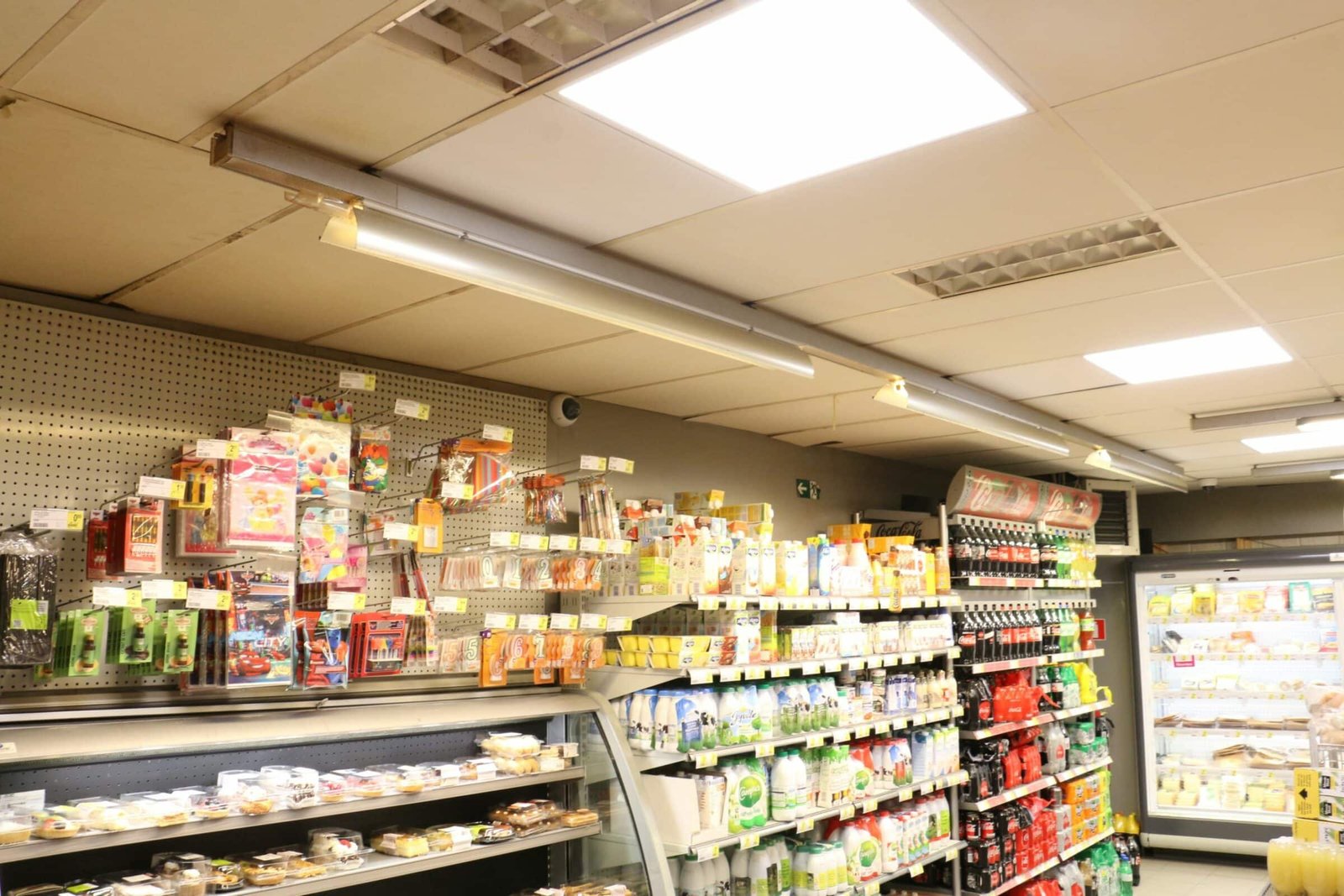
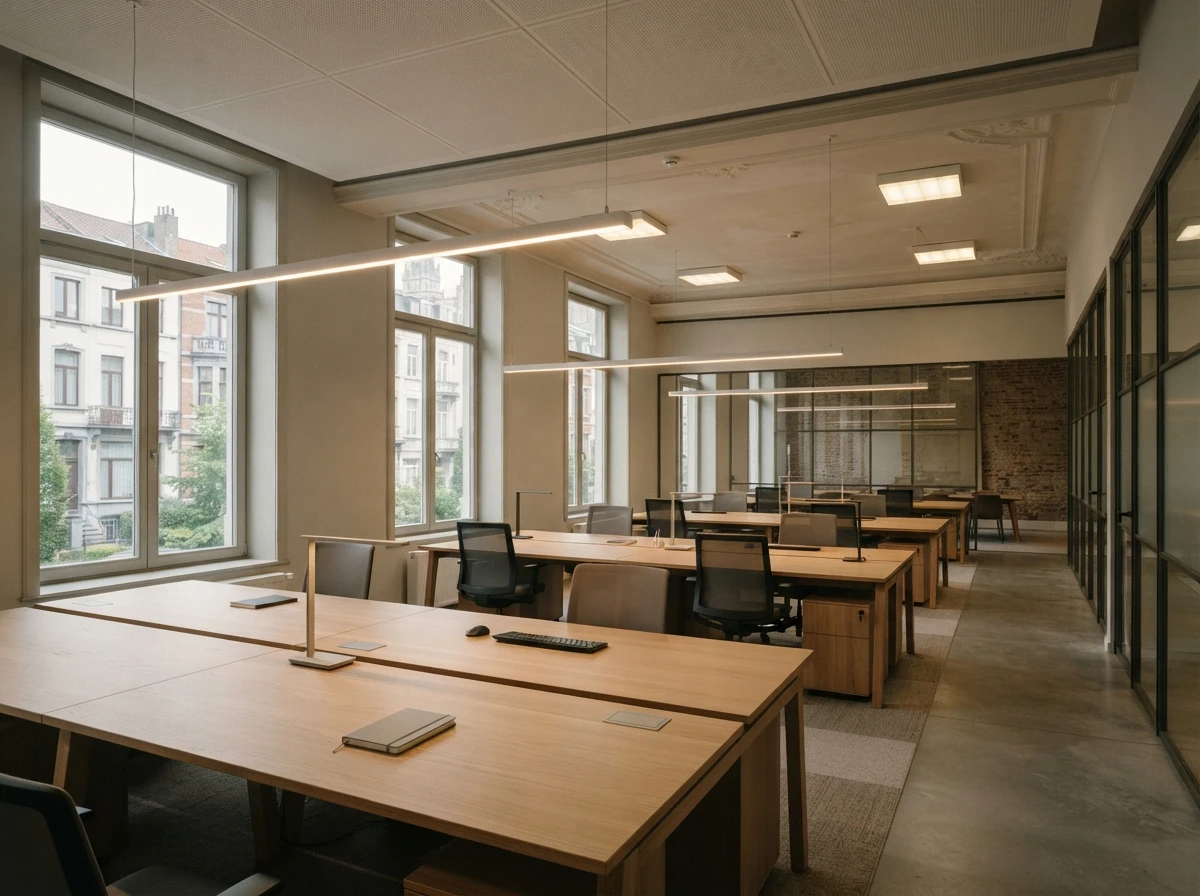
Your lighting is ageing, uses too much energy or no longer does the job. Two options present themselves: replacing the light sources with LEDs while keeping the existing fittings, known as relamping, or rethinking the lighting as a whole. The first is quick and economical. The second requires more investment, but solves problems relamping does not touch. The right choice depends less on budget than on what is actually wrong today.
Two approaches, two objectives
| Relamping | Lighting renovation | |
|---|---|---|
| Principle | Replacing the light sources in existing fittings with LEDs | Rethinking layout, fittings and control |
| Main objective | Reducing energy use and maintenance | Improving light quality and matching it to uses |
| Investment | Limited | Higher, but long-lasting |
| Works | Light, often without interrupting activity | Heavier, sometimes coordinated with other works |
| What stays the same | The position and optics of the fittings | Nothing is fixed |
We cover the first option in detail in our article on LED relamping.
When relamping is enough
- The fittings are in good condition and their optics are still suitable.
- The layout works : no dark areas, no poorly lit workstations.
- The goal is mainly energy-related : lowering the bill and spacing out replacements.
- Uses have not changed since the original installation.
When you need to go further
- Complaints are about the light itself : glare, reflections on screens, visual fatigue. A new source in an old fitting does not fix poor optics.
- The space has changed use : former cellular offices turned into an open space, a stockroom turned into a sales floor.
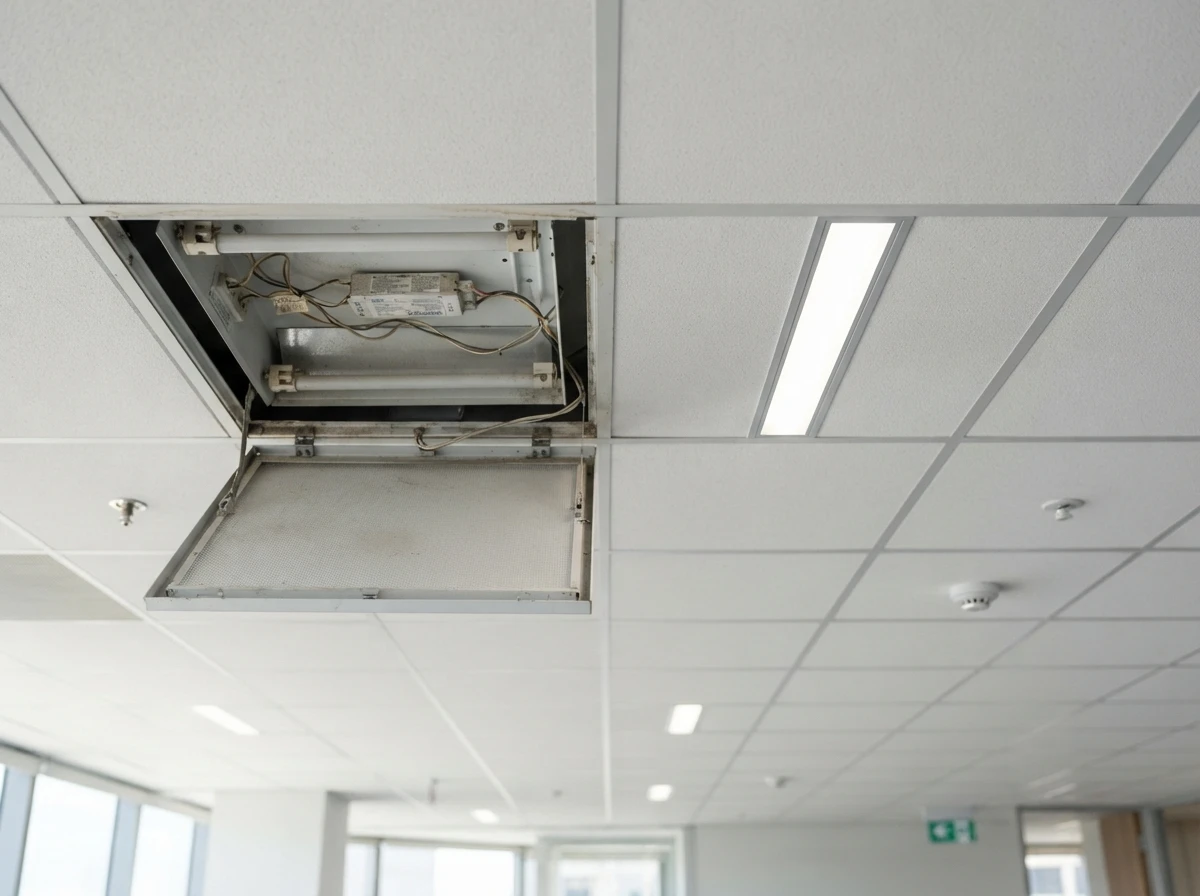
- The fittings are worn out : yellowed diffusers, tired ballasts, parts no longer available.
- Products are no longer shown at their best : in a shop, lighting is a sales tool, not just a cost.
- Works are already planned : renewing the lighting along with a ceiling or refit costs far less than doing it later.
The case of fluorescent tubes
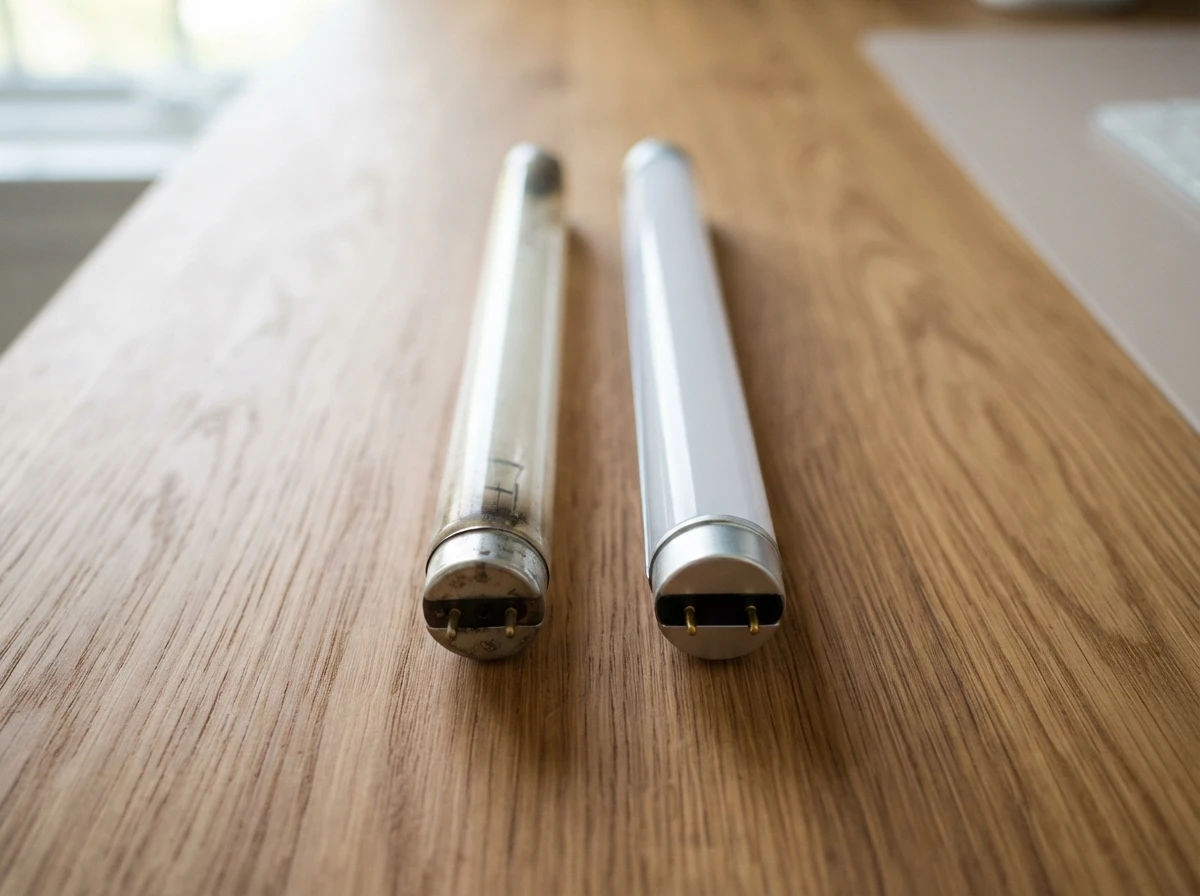
Since 2023, most T5 and T8 fluorescent tubes can no longer be placed on the market in the European Union. Stocks are running out, and the question of replacement will arise wherever these tubes are still in use. An LED replacement tube may be suitable, provided compatibility with the fitting is checked and, often, the old ballast is removed. Our article on replacing TL tubes explains the precautions to take.
A simple decision grid
| Your situation | Recommended option |
|---|---|
| The lighting works, but uses too much energy | Relamping |
| Glare, reflections or visual fatigue | Renovation |
| Dark areas or uneven lighting | Renovation |
| Fittings in good condition, uses unchanged | Relamping |
| Refit or ceiling works planned | Renovation |
| Limited budget, but real needs in some areas | Mixed approach: relamping everywhere, renovation in key areas |
The mixed approach, often the smartest
You do not always have to choose. In many buildings, the best solution is to relamp secondary areas such as corridors, storage or toilets, and to focus investment on the spaces that matter: workstations, meeting rooms, sales floor or shop window. You get most of the energy savings, and a real improvement where it shows.
Conclusion
Relamping is an excellent way to save energy when the existing lighting is well designed. But it does not correct glare, poor distribution or a change of use. Before deciding, you need to identify what is really wrong. Our custom lighting design study makes that diagnosis and chooses the right option, zone by zone, for offices or a retail space. For a first opinion, Express Advice is often enough.