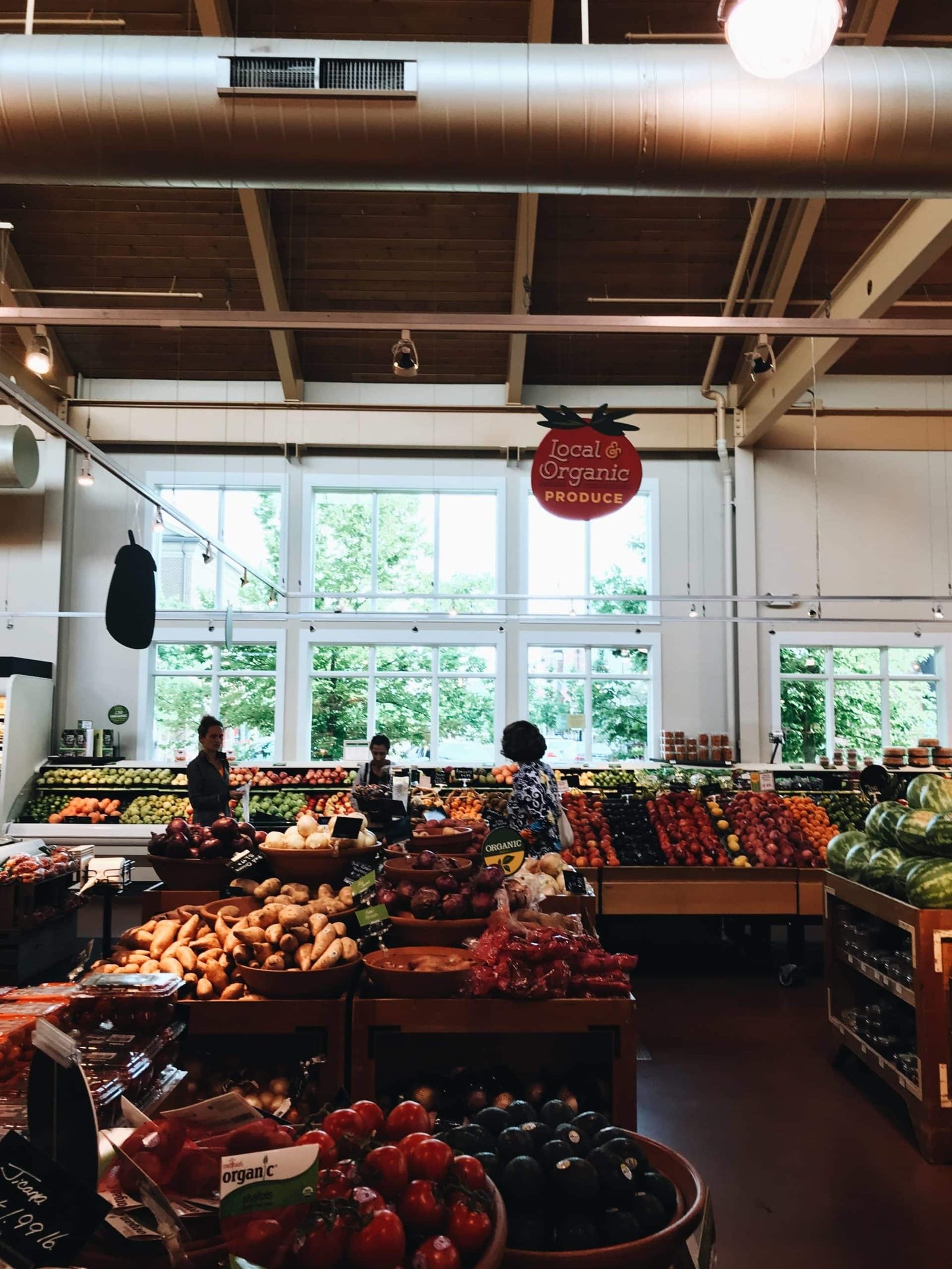
Consistency between lighting and organic identity
The customer of an organic shop is sensitive to the environment they frequent. Cold, harsh or aggressive lighting creates an immediate dissonance with the natural and artisan universe that most organic retailers seek to project. Conversely, overly dim lighting harms product legibility and customer safety.
The right balance sits around 3000 K, with accents at 2700 K in fresh produce display zones. This range renders the warm tones of wood, linen and natural materials used in the fit-out, while doing justice to the colours of fresh products.
CRI and food products: what the standard does not say
The EN 12464-1 standard sets a minimum CRI of 80 for retail spaces. That is a floor, not a target. In an organic shop, a CRI of 90 to 95 on fresh and fruit/vegetable aisles makes a visible difference: the greens of salad leaves, the reds of tomatoes and the oranges of citrus fruits regain their natural brilliance, reinforcing the perception of freshness and the purchase impulse.

Illuminance levels by zone
| Zone | Recommended illuminance | Min. CRI | Colour temperature | Note |
|---|---|---|---|---|
| Fruit and vegetable aisle | 500-750 lux | CRI 90+ | 2700-3000 K | Accent on end-of-aisle displays |
| Bulk and dry goods | 300-500 lux | CRI 80+ | 3000 K | Uniformity across bins, avoid shadow zones |
| Refrigerated fresh aisle | 500-750 lux | CRI 90+ | 3000 K | Low heat output sources, min. IP44 |
| Till and reception | 300-500 lux | CRI 80+ | 3000 K | UGR < 19, workstation comfort |
| General circulation | 200-300 lux | CRI 80+ | 3000 K | Chromatic consistency with aisles |
| Exterior window display | According to exposure | CRI 80+ | 3000 K | IP65, street-level visibility |
Energy consumption: a consistency argument
An organic shop that displays strong environmental commitments has every reason to ensure its electrical installation matches them. LED is today the only technology consistent with this stance: 80 to 90% savings compared to halogens, a lifespan ten times longer than compact fluorescents, mercury-free, recyclable components.
- Dimming : automatic reduction outside peak hours, light scenes according to opening times
- Presence detection : storerooms, sanitary areas and storage zones lit only on demand
- Centralised management : consumption monitoring by zone, monthly reporting possible
Frequently asked questions
Does bulk require different lighting from packaged products?
Not necessarily in colour temperature, but in illuminance level and direction. Bulk requires uniform light across the bins to avoid shadow zones that impair product legibility. Packaged products with graphic packaging benefit more from directional accents that bring out colours and shapes.
Does LED lighting heat fresh products in display cases?
Modern LED sources generate very little forward radiant heat. Heat is dissipated rearward via the heat sink. For refrigerated display cases, we select sources specifically approved for this use, which do not affect the thermal regulation of the enclosure.
Conclusion
Organic shop lighting is not a regulatory requirement to be satisfied — it is a lever for consistency with your brand identity and a tool for showcasing your products. Faithful colour rendering, appropriate visual warmth and controlled energy consumption form a whole that speaks to your customers without them needing to articulate it.
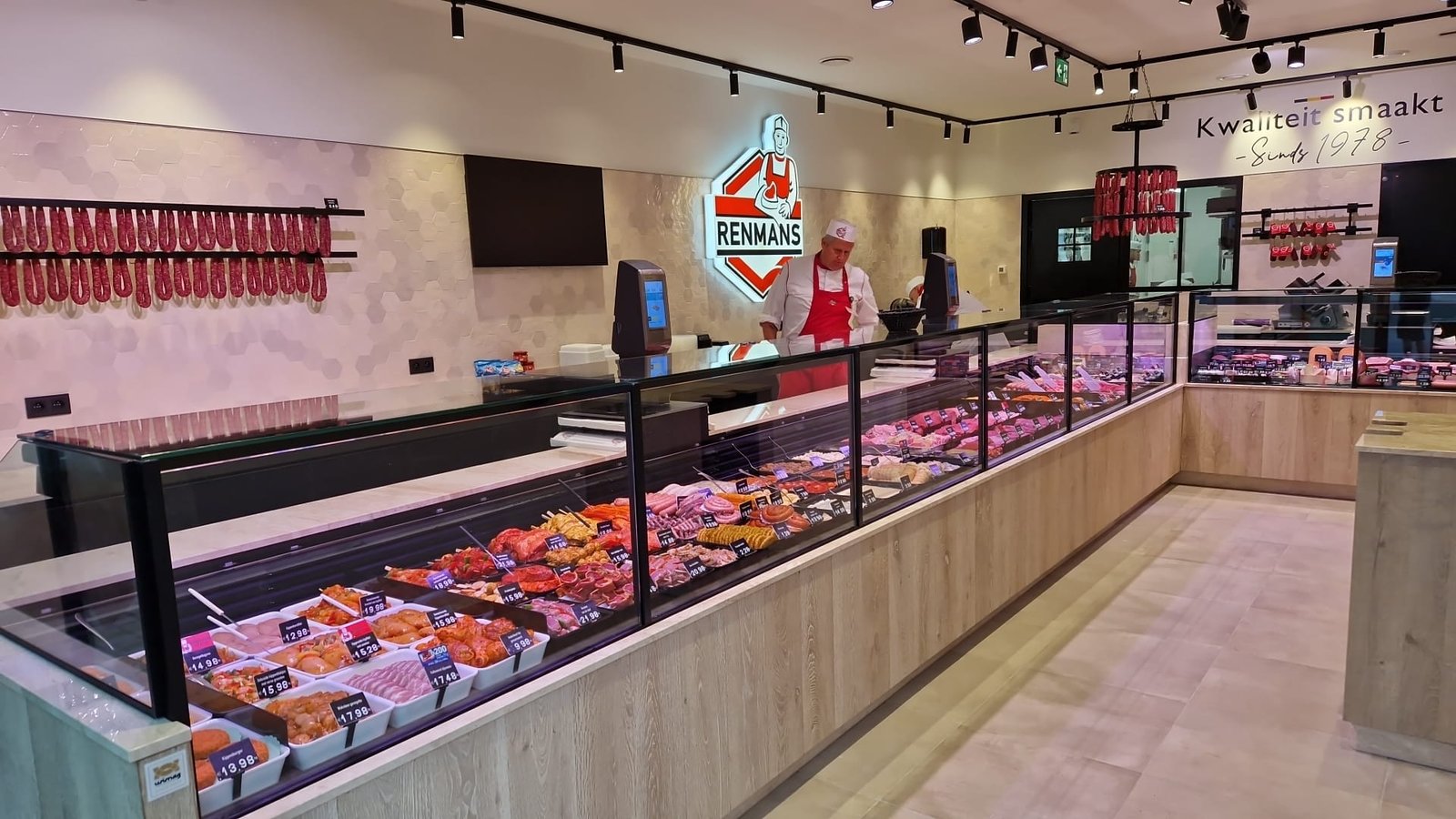
For food retailers with similar rendering requirements, see our pages butcher shop lighting and bakery lighting. To scope your project, start with our personalised study or express advice.