
Rendering golden tones: the central technical challenge
Bakery products have a very specific chromatic palette: the warm browns of crusts, the golden tones of viennoiseries, the creamy whites of cream-based pastries, the reds and oranges of fruit on tarts. This palette is particularly sensitive to the colour temperature and CRI of the light source.
Under cool light (4000 K and above), golden tones pull towards dull yellow and browning loses its depth. Under overly warm light (below 2700 K), everything can appear monochromatic. The 2700-3000 K range with CRI 90+ is the combination that renders the chromatic richness of bakery products in their best expression.
CRI and freshness perception
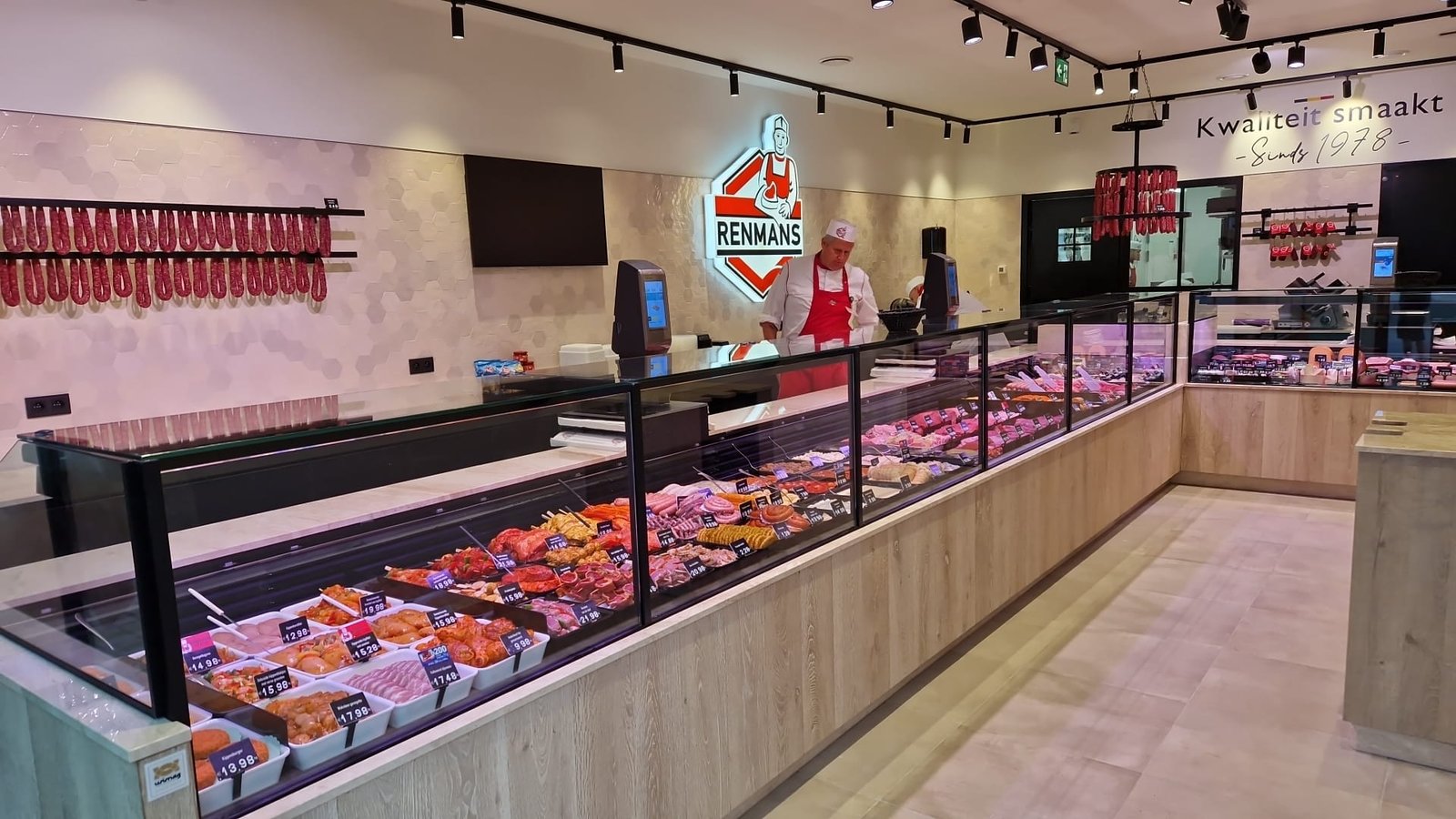
As with a butcher's shop, CRI plays a direct role in the perception of freshness and quality. A CRI 90+ renders the gloss of éclair glazing, the velvety texture of cream on a fruit tart, the uniform golden colour of a traditional baguette. These visual details trigger the purchase and justify the pricing of an artisan bakery.

Bakery zones and recommended illuminance levels
| Zone | Recommended illuminance | Min. CRI | Colour temperature | Specific requirement |
|---|---|---|---|---|
| Refrigerated pastry display case | 500-750 lux | CRI 90+ | 2700-3000 K | Low heat output sources, min. IP44 |
| Bread and viennoiserie display | 300-500 lux | CRI 90+ | 2700-3000 K | Directional accent, no shadow zones |
| Sales counter | 500 lux | CRI 90+ | 2700-3000 K | UGR < 19, no customer glare |
| Tasting area / tearoom | 150-300 lux | CRI 80+ | 2700 K | Warm ambiance, dimming per service |
| Bakehouse / laboratory | 500 lux | CRI 80+ | 4000 K | IP65, safety glass, washable surfaces |
| Exterior window display | According to exposure | CRI 80+ | 3000 K | IP65, street-level visibility |
Hygiene and food zone compliance
As in a butcher's shop, preparation and production zones are subject to HACCP requirements. The bakehouse and pastry laboratory require fittings whose design does not encourage residue accumulation and whose resistance to repeated cleaning is guaranteed.
- Minimum IP65 in the bakehouse and laboratory
- Safety protection glass (shatter-resistant) in production zones in contact with food
- Sealed housings with no recesses accessible to flour or grease deposits
- Resistance to steam and significant hygrometric variations in the baking zone
- Controlled surface temperature to avoid condensation above cooling products

Ambiance and brand identity
A premium artisan bakery and a supermarket in-store bakery do not share the same lighting, and that is precisely what visually differentiates the two. Lighting contributes to the brand identity: warm and precise for a neighbourhood bakery, more pared-back and architectural for a gastronomic pastry house.
Bakeries with a tasting area or tearoom benefit from a dual-circuit approach: functional and dynamic lighting for the sales floor, dimmed and dimmable lighting for the seated area. This separation can be managed on a simple panel without any home automation investment.
Frequently asked questions
Can the lighting be renovated without closing the bakery?
In most cases, yes. Replacing sources in existing housings is done zone by zone, often outside opening hours or on the weekly closing day. A more structural renovation project with new wiring requires more precise planning, which we scope in advance with the manager.
What is the difference between lighting a bakery and a gastronomic pastry shop?
A gastronomic pastry shop generally requires an even higher CRI (95+) on display cases, more precise source positioning to showcase the intricacy of finishes, and sometimes a slightly warmer colour temperature (2700 K) to reinforce the impression of luxury and craftsmanship. The approach is the same — the requirements are simply more refined.
Conclusion
Bakery lighting is a direct commercial lever: it triggers appetite, justifies the price and builds the visual identity of the brand. High CRI, well-dosed warm temperature and impeccable hygiene in the production zone are the three pillars of a successful installation.
For food retailers with similar rendering and hygiene requirements, see our pages butcher shop lighting and organic shop lighting. To scope your project, our personalised study is the right starting point, or express advice for an initial orientation.