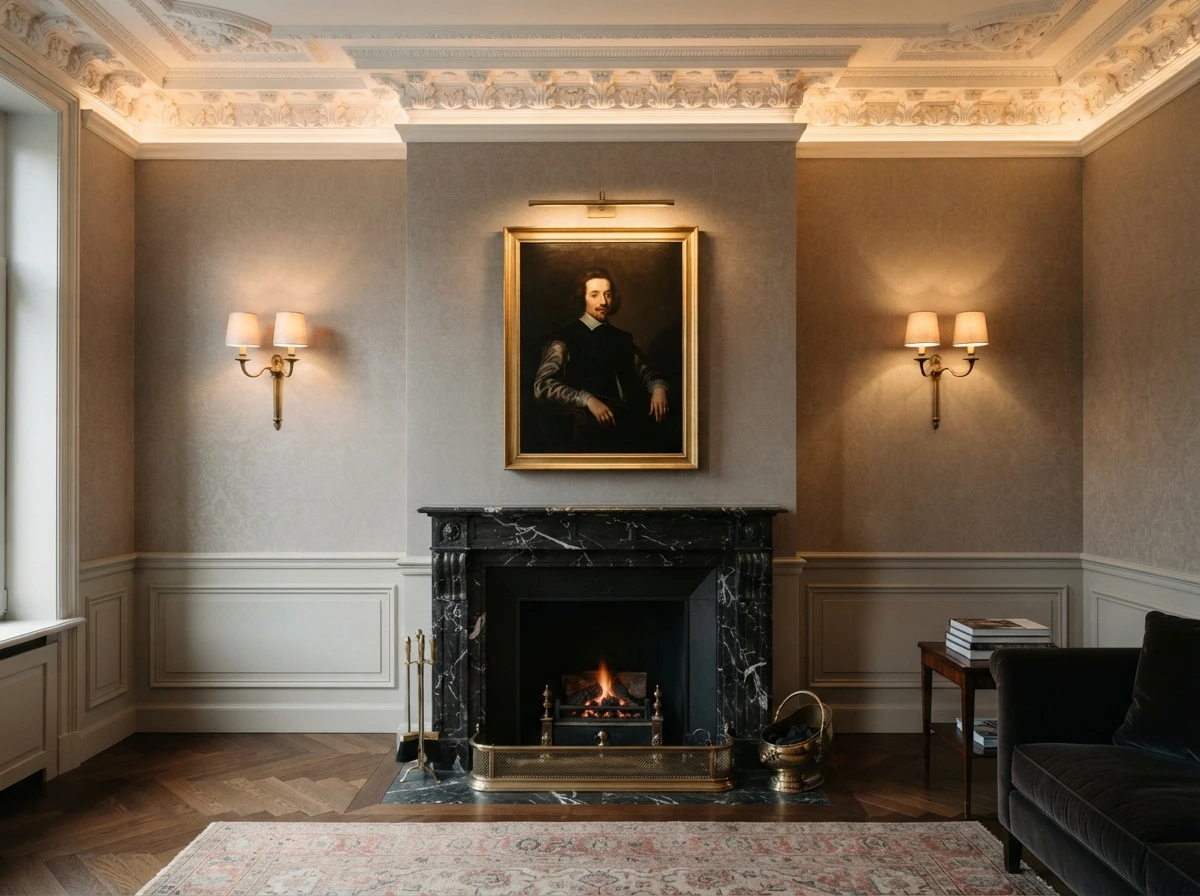
High ceilings, mouldings, ceiling roses, marble fireplaces, old parquet floors and interconnecting rooms: the Brussels townhouse, or maison de maître, has a character worth preserving. It is also one of the hardest interiors to light. Usual solutions, such as recessed spotlights in a grid, are often impossible or out of place. Lighting a townhouse well means revealing its architecture without ever contradicting it.
The constraints of these interiors
- Ceiling height : often well above today’s standards. Light from a central ceiling fitting is lost before it reaches the living areas.
- Decor to preserve : you do not recess spotlights into a moulded cornice or around an original ceiling rose.
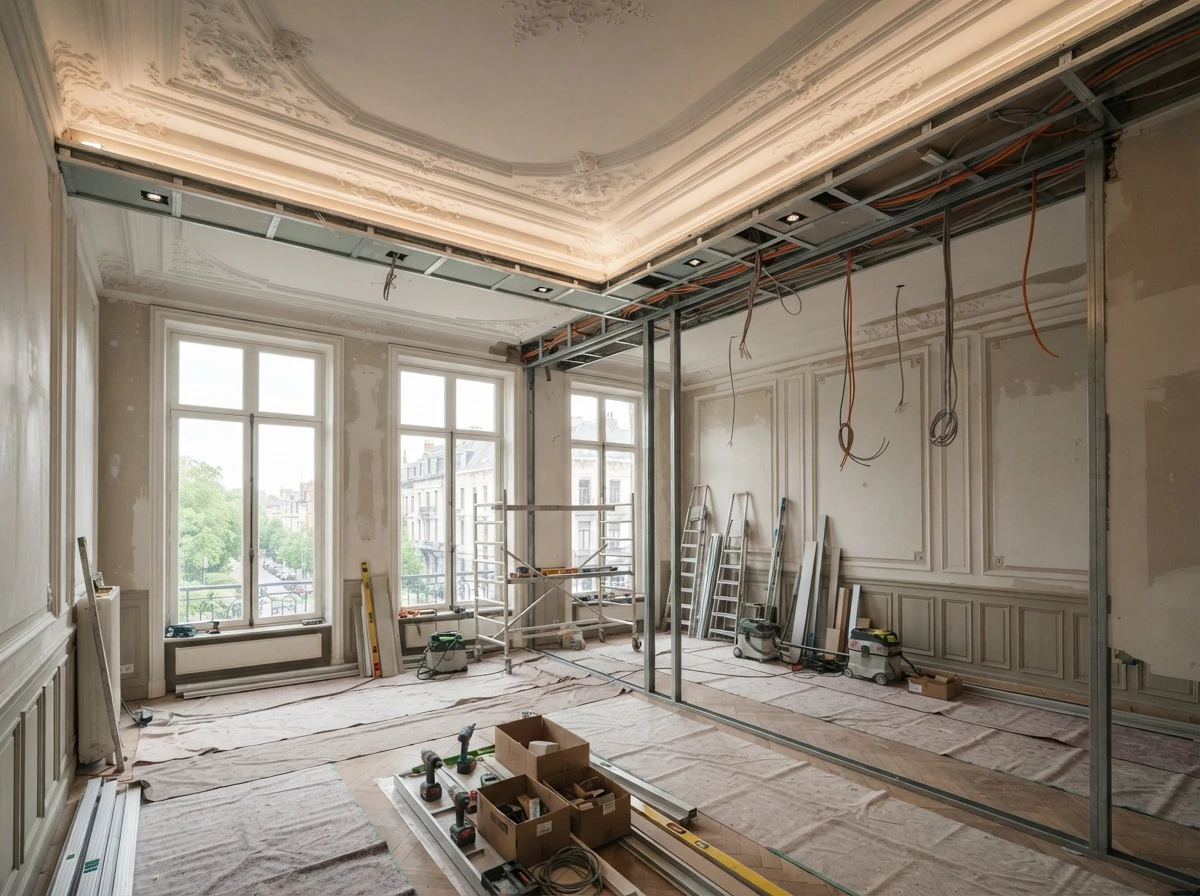
- No suspended ceiling : without a ceiling void, fittings cannot be integrated without damaging the existing ceiling.
- Old wiring : running new supplies requires method to avoid multiplying chases.
- Interconnecting rooms : double drawing rooms and open doors call for consistent lighting from one room to the next.
Solutions that respect the architecture
Indirect light in the cornices
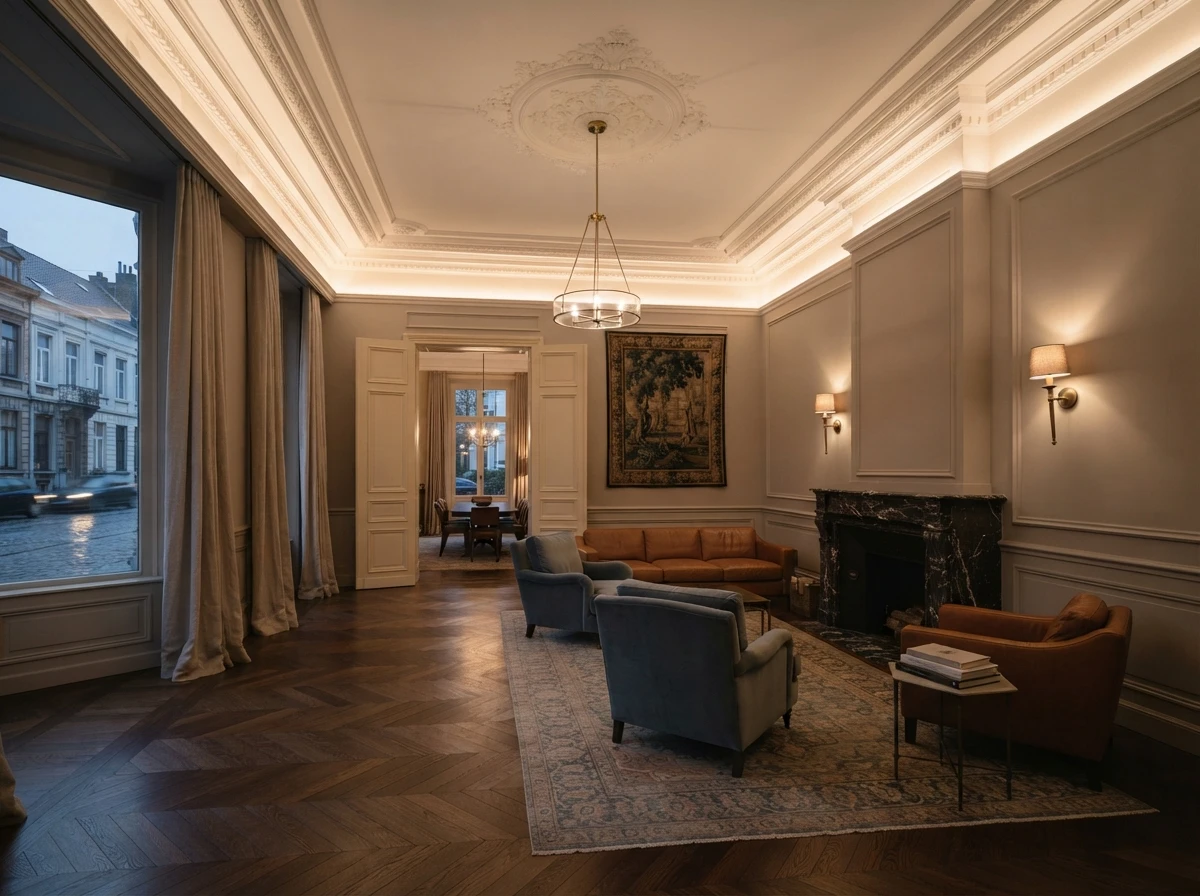
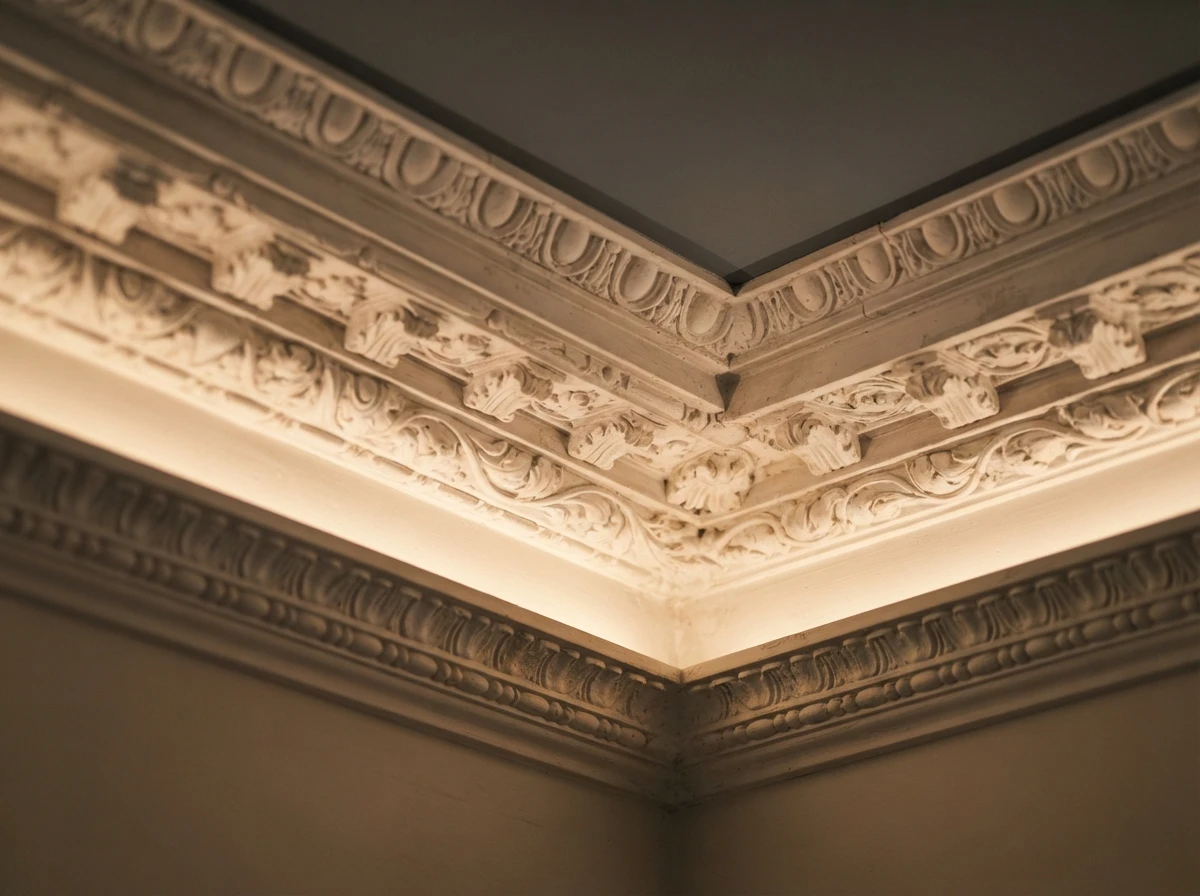
A discreet LED profile placed above a cornice or in a cove sends light up to the ceiling. The mouldings stand out, the height is emphasised, and the room receives soft, enveloping light with no visible source. It is often the most striking solution, and the most respectful of the decor.
The pendant, at the right height
An original ceiling rose calls for a chandelier or pendant. With high ceilings, the suspension height becomes decisive: a fitting lowered over the table or along the axis of the room brings light back to where you live, while filling the volume.
Wall lights and floor lamps
In these interiors, light works best from the walls and the floor. Wall lights on either side of a fireplace or mirror, floor lamps by the armchairs and table lamps create several layers of light at eye level. Connected to switched sockets, they all come on from the room switch.
Targeted accent lighting
Artworks, a bookcase, a fireplace or wood panelling deserve dedicated lighting: discreet projectors on a slim track, or small spotlights on stands. With high colour rendering, CRI 90 or above, old materials and the colours of paintings regain all their depth.
The right settings
| Parameter | Recommendation | Why |
|---|---|---|
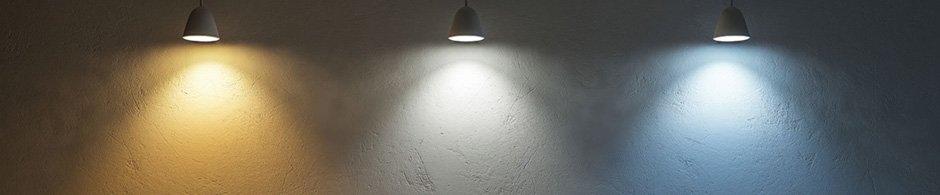
| Colour temperature | 2700K to 3000K | Warm light flatters wood, marble and old plasterwork |
| Colour rendering | CRI 90 minimum | Faithful rendering of artworks, fabrics and materials |
| Dimming | On every main circuit | Switching from reception lighting to an intimate atmosphere |
| Separate circuits | Indirect, pendant, wall lights, accents | Composing atmospheres instead of switching everything on at once |
To choose the right shade for each room, see our article on choosing the right shade of white.
Wiring without damage
The best interventions are the ones you cannot see. Old conduits, skirting boards, the back of cornices or floorboards lifted during a renovation often offer discreet routes for new supplies. If the building is listed or included in the heritage inventory, some interventions may require a permit: it is best to check before finalising the project.
Mistakes to avoid
- Recessing spotlights in a grid in a moulded ceiling: the decor is broken and the light stays flat.
- Relying entirely on the chandelier : it dresses the room, but it cannot light it on its own.
- Choosing cool light : it gives plaster and wood a dull, institutional look.
- Forgetting interconnecting rooms : different shades or intensities from one room to the next show as soon as the doors are open.
Conclusion
A townhouse is not lit like a contemporary interior. Indirect light in the cornices, pendants at the right height, wall lights, floor lamps and well-judged accents reveal the architecture while offering modern comfort. As every house is unique, these projects require a careful reading of the place. That is what our custom lighting design study offers, in Brussels and across Belgium since 1971. Discover also our approach to house lighting.