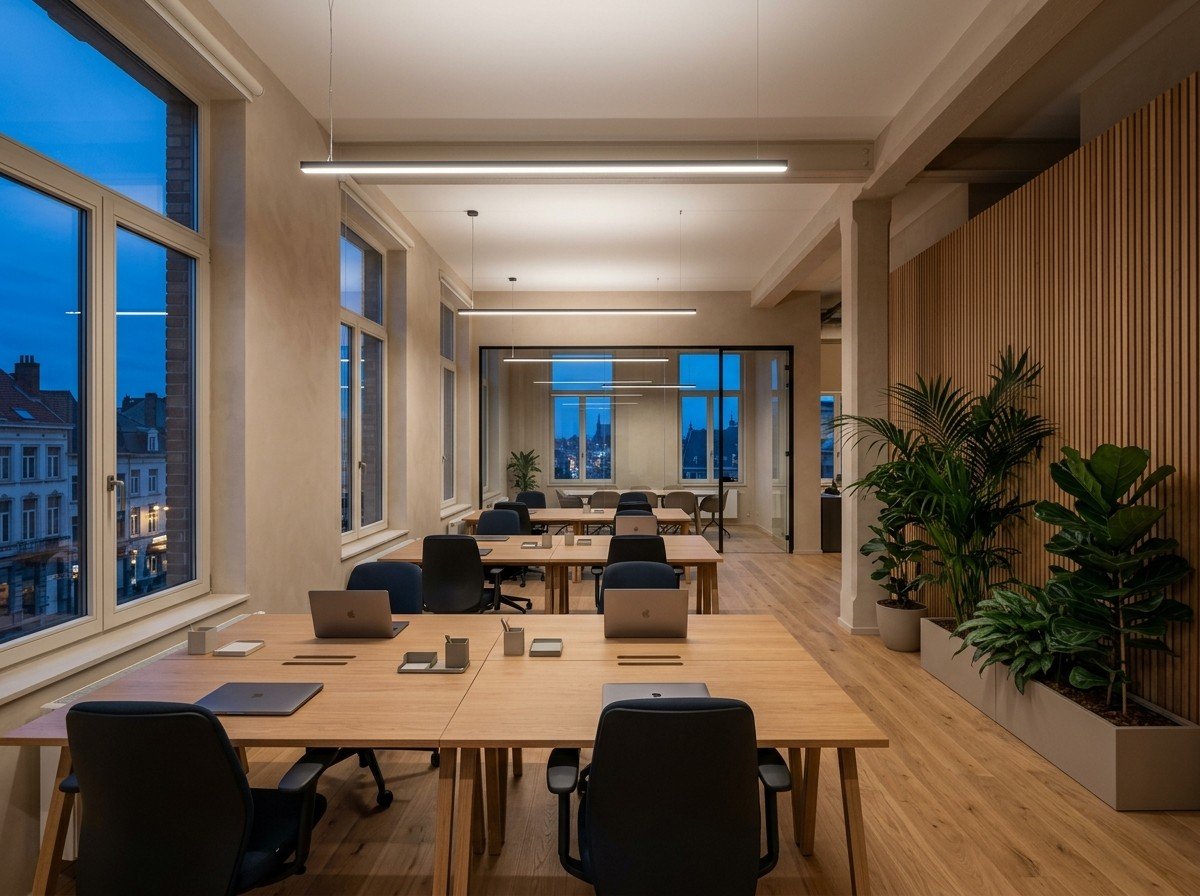
At the end of October, we switch to winter time. In Belgium, the days get shorter, with less than eight hours of natural light in December, and many employees arrive at the office at dawn and leave in the dark. For several months, artificial light becomes the only light they actually see. And yet, in most offices, it remains the same from 8 am to 6 pm, as if the sun did not exist.
What daylight does that your ceiling lights don’t
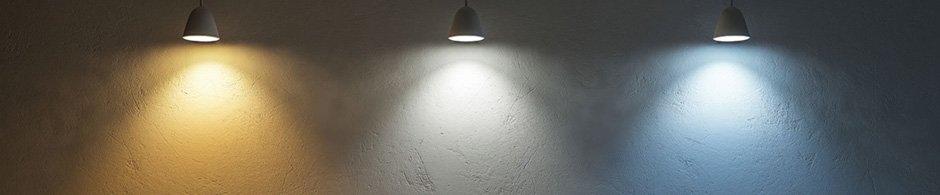
Natural light is not just a question of quantity. It changes in colour and intensity throughout the day: warm and soft in the morning, white and bright at midday, and warmer again in the late afternoon. These variations play a role in our circadian rhythm, the internal clock that regulates wakefulness and sleep.
Traditional office lighting, with a fixed colour temperature of 4000K, provides a good level of lux. But it does not reproduce any of this dynamic range. This is precisely what dynamic white lighting – also known as ‘tunable white’ or ‘Human Centric Lighting’ – offers.
Dynamic white – how does it work?
A tunable-white luminaire contains two types of LED: one emitting warm white light and the other emitting cool white light. By adjusting the balance between the two, it can produce the entire range in between, typically from 2700K to 6500K. When combined with a control system, it automatically adjusts the colour temperature and brightness throughout the day.
| Time of day | Colour temperature | Intensity | Objective |
|---|---|---|---|
| Arrival: 8 am to 10 am | 3,500K to 4,000K | Average, rising | A gentle wake-up, getting started |
| Morning session, 10.00 am to 12.00 pm | 5,000K to 6,000K | High | Alertness and concentration |
| Early afternoon | 4,000K to 5,000K | High | Counteracting the post-lunch slump |
| End of the day, after 4 pm | 3000K to 3500K | Gradually falling | Preparing for the transition into the evening |
These graphs are for illustrative purposes only. They are adjusted according to the teams’ actual working hours, the building’s orientation and the amount of natural light.
What this actually means in practice
- A reduced feeling of tiredness at the end of the day, often reported by occupants following the installation of dynamic lighting.
- A livelier atmosphere: an office with changing light feels less artificial, especially in winter.
- Improved energy management: when linked to daylight sensors, the system dims the lights when natural light is sufficient.
- A key selling point: in the race for talent, the quality of the working environment matters.
Let’s be honest: dynamic white isn’t a medical treatment, and its effects vary from person to person. It’s a way of enhancing comfort, to be used alongside the basics.
The basics first
Poorly designed dynamic lighting is still bad lighting. Before we talk about circadian curves, we need to ensure that:
- The correct level of illumination: 500 lux at workstations, in accordance with standard EN 12464-1.
- Glare-free viewing: a UGR of less than 19, as detailed in our article on UGR standards.
- Accurate colour rendering: minimum CRI 80, 90 for greater comfort.
- Uniformity across the floor area is a key consideration that we address when designing lighting for an open-plan office.
Technical aspects: control systems
To vary the colour temperature reliably and in a coordinated manner across an entire floor, the most widely used protocol is DALI, and more specifically DALI DT8, which is designed for colour control. It allows you to programme scenarios, adjust them by zone and link them to sensors. Our article on DALI drivers explains how they work.
Good news: in many cases, there’s no need to replace everything. When replacing lamps or luminaires, opting for tunable white luminaires and compatible drivers involves only a modest additional cost but delivers long-term benefits.
Conclusion
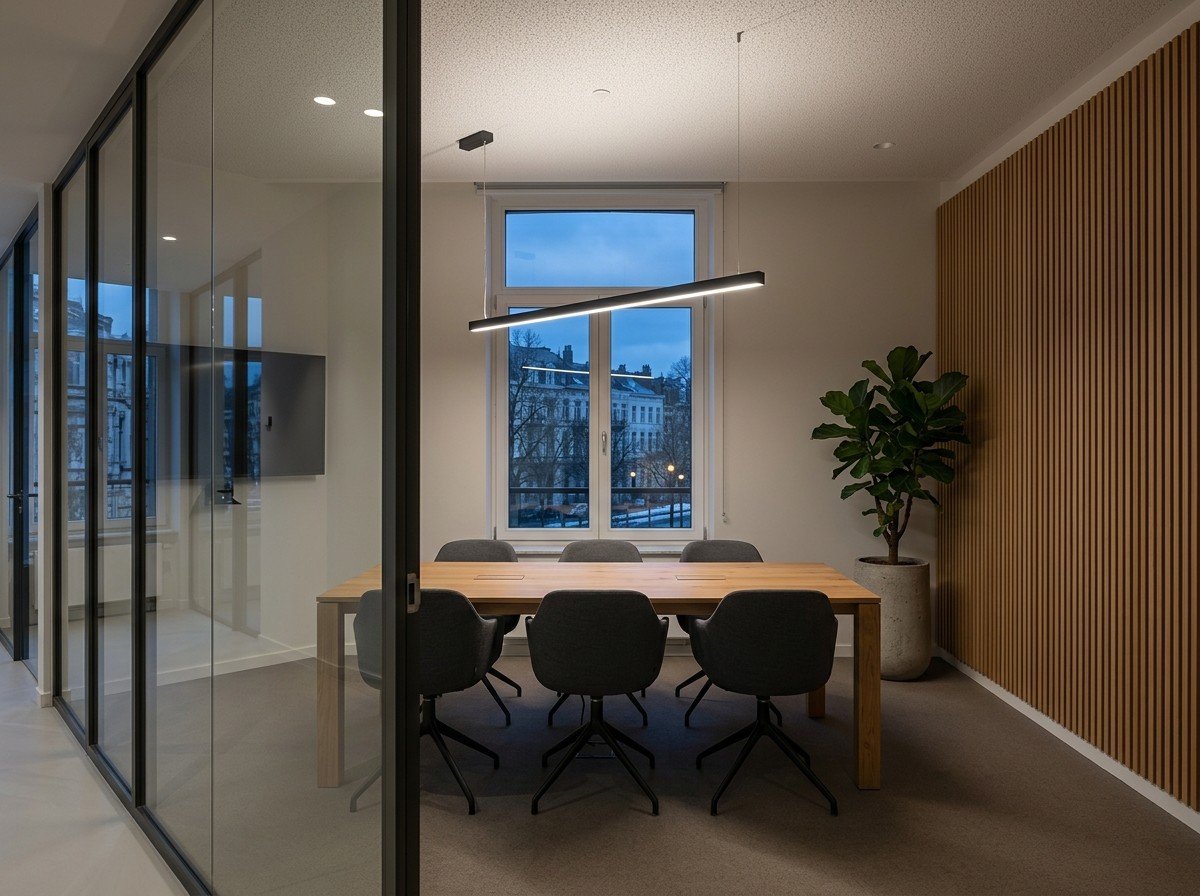
Winter highlights the limitations of a static office lighting system. Dynamic white lighting can bring a sense of rhythm back to days when natural light is scarce, provided it is underpinned by a robust system: a good lux level, controlled UGR and reliable control. Rodalight supports these projects in office, meeting room and co-working spaces, such as the eBay Belgium offices in Brussels. For a comprehensive project, our bespoke consultancy service covers analysis, design and monitoring.