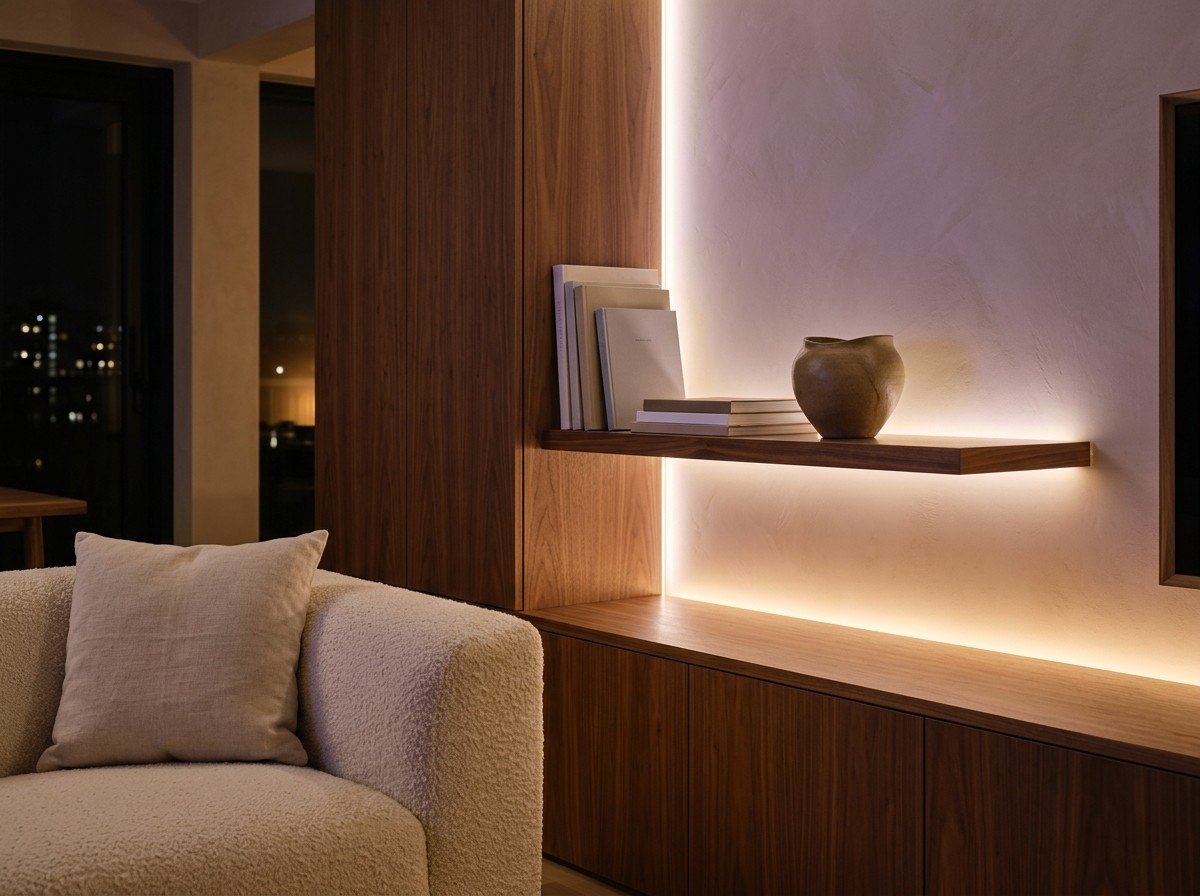
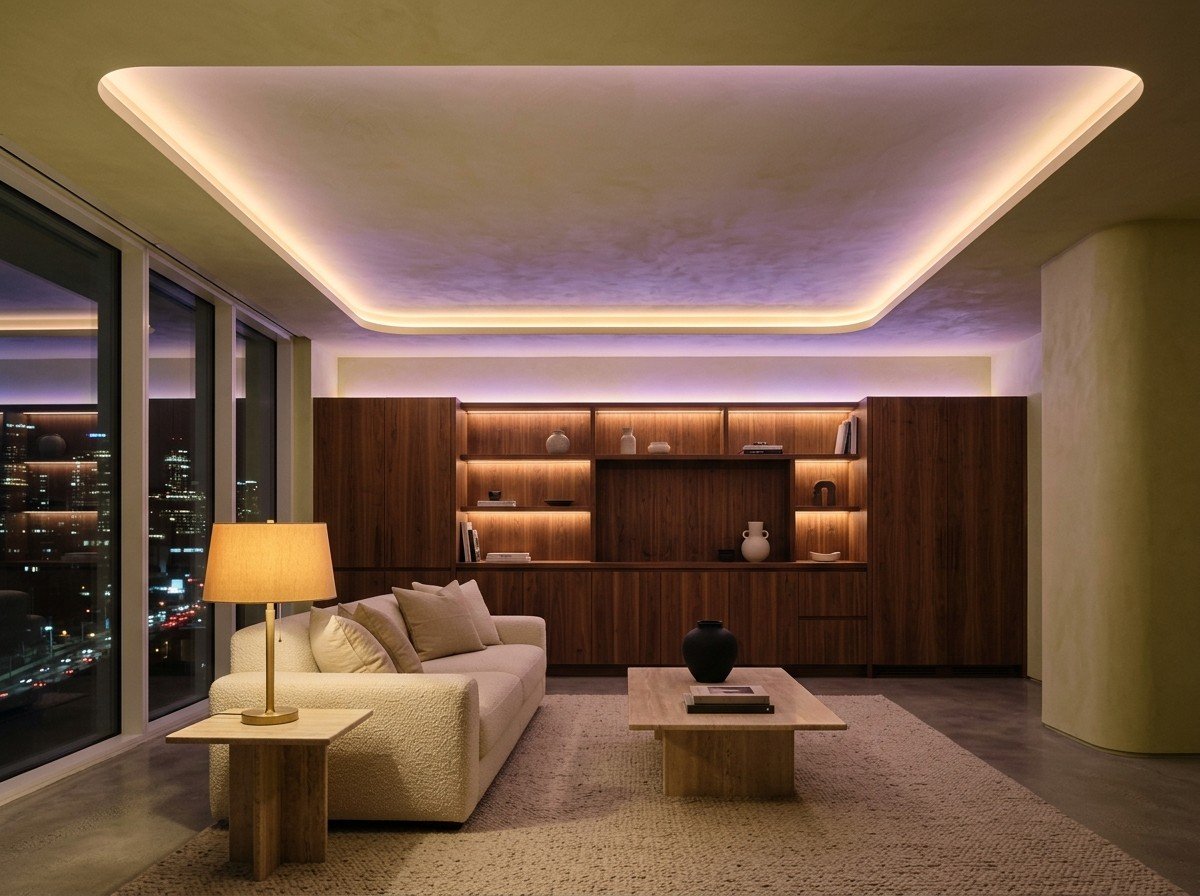
A light running along the ceiling, colours blending into one another, a colour gradient that follows the music: these effects can be seen everywhere on social media, from TikTok to Instagram. Behind this spectacular result lies a sophisticated technology: the addressable LED strip. Easy to buy, but far less easy to install properly. Here’s what you need to know before you get started, whether at home or in a shop.
RGB, RGBW, addressable: what’s the difference?
Not all coloured LED strips are the same. The wave or scroll effect that makes videos so popular is only possible with a specific type of strip.
| Ribbon type | Principle | Possible effect | White light |
|---|---|---|---|
| Classic RGB | The whole ribbon is the same colour | Permanent colour or general change | Reconstructed white, often with a bluish tinge and not very true to life |
| RGBW / RGBCCT | Add one or two pinches of real white | Colours + true warm white or neutral white | Good, suitable as additional lighting |
| Addressable (pixel) | Each LED or segment is controlled individually by an integrated chip | Transitions, waves, scroll effects, music effects | Varies by model |
Addressable LED strip lights use control chips such as the WS2812B (5 V) or WS2815 (12 V). Thanks to this built-in electronics, the lights can be controlled individually, but this also makes installation more difficult than with a simple monochrome string of lights.
The technical aspects that make all the difference
Voltage and voltage drop
The lower the voltage, the poorer the current flow along the length of the strip. With a 5 V strip several metres long, the LEDs at the end receive less voltage: the colours fade and the brightness decreases towards the end of the strip. For long lengths, 12 V or 24 V is preferred, and additional power supplies are provided at regular intervals.
Nutrition
An addressable light strip that operates at full power in white consumes much more power than when it operates in muted colours. The power supply must be rated for this maximum consumption, with a margin of approximately 20 per cent. A power supply that is undersized will overheat and cause flickering or premature failure.
The profile and the air diffuser
When a strip is fitted directly onto a piece of furniture, the light points illuminate one by one, creating the ‘bead effect’. An aluminium profile dissipates heat and extends the lifespan of the LEDs, whilst an opal diffuser softens the light into a continuous line. COB light strips, with no visible light points, are another option, which we compare in our article ‘SMD vs COB’.
The controller and the connection
- Wi-Fi or Bluetooth: controlled via an app, ideal for home use.
- Zigbee or Matter: integration into an existing home automation system.
- DMX or a dedicated controller: for pre-programmed and reliable lighting scenes in a public or commercial space.
What the videos don’t show: the flickering
Most string lights control their brightness using pulse width modulation (PWM), which involves switching the LEDs on and off very rapidly. The human eye doesn’t notice this, but a smartphone does. If the frequency is too low , black stripes appear on the screen in the video. For a shop that wants customers to film and share the location, choosing a controller with a high PWM frequency is no luxury.
In a shop: a passing fad or a real game-changer?
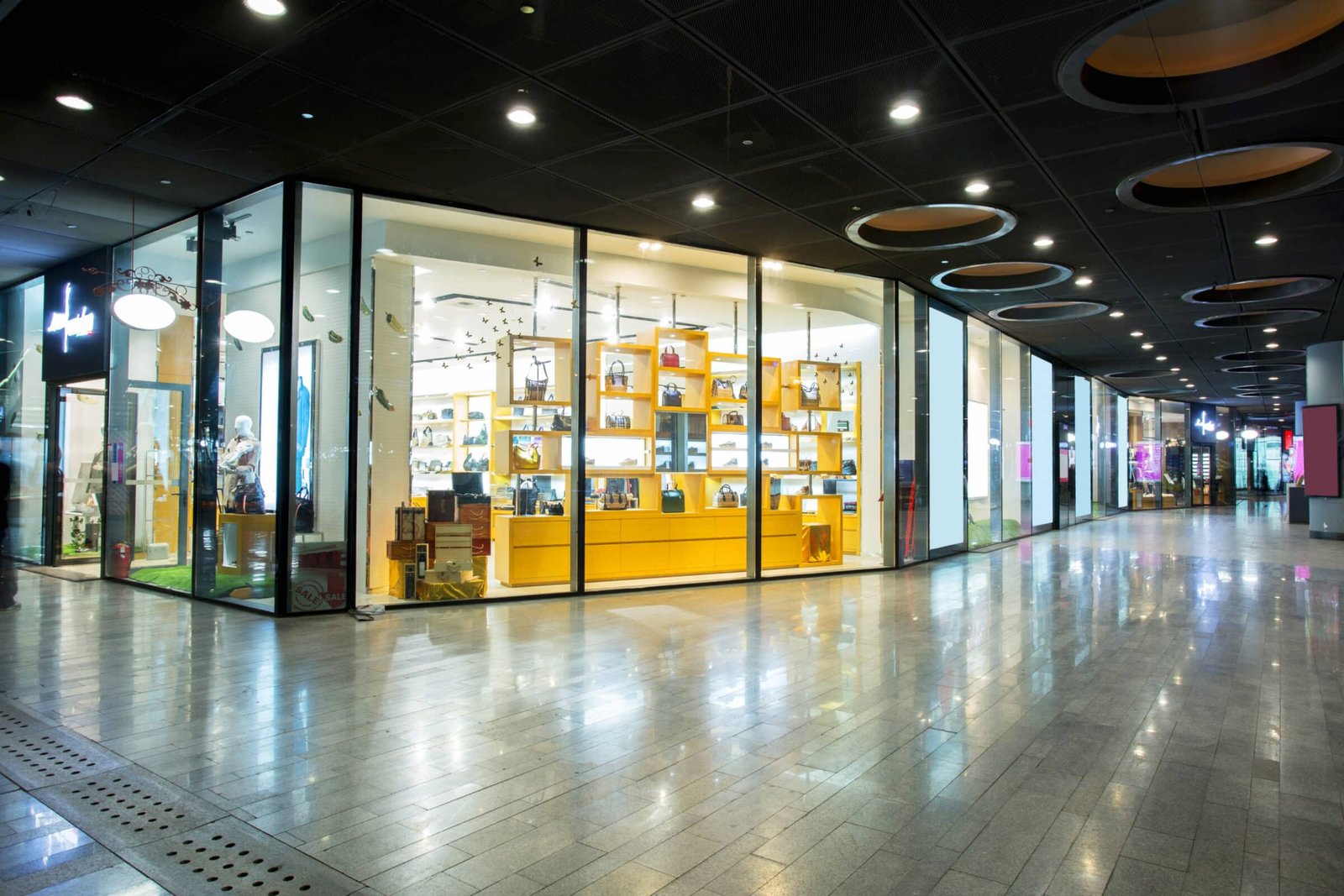
Dynamic lighting can attract attention, particularly in a shop window, behind a bar or in an event venue. But there are limits:
- The colour detracts from the product: pink or blue lighting alters the way a garment, a food product or a piece of jewellery is perceived. The colour effect must remain a subtle accent and must never distract attention from the product.
- Physical activity is tiring: a non-stop programme can quickly become too demanding for staff. Calm programmes during the day and livelier ones in the evening work better.
- Trends come and go: a light strip built into a profile, emitting dynamic white light, remains useful even as fashions change.
A shop window remains, first and foremost, a sales tool, as we explain in our article on shop window lighting.
Conclusion
The addressable LED strip is not just a gadget, provided you treat it as a proper lighting system: the correct voltage, a suitably rated power supply, a profile, a diffuser and a suitable controller. It creates a unique atmosphere in an interior. In a shop, it should put the products in the spotlight. If you’re considering integrating it into a commercial lighting setup or in a restaurant, you can use a ‘Conseil Express’ to have your choice of strip and its control system validated prior to installation.