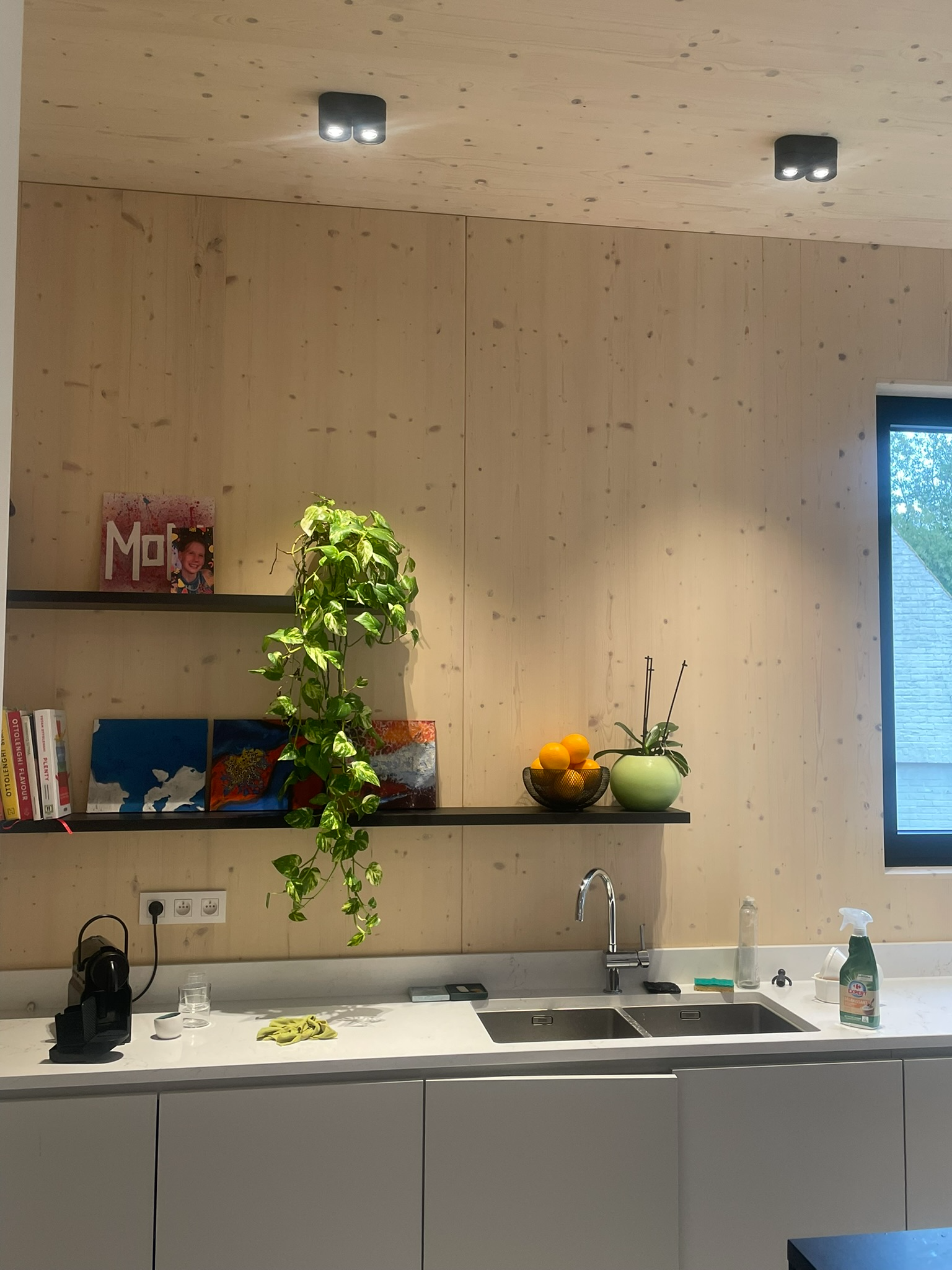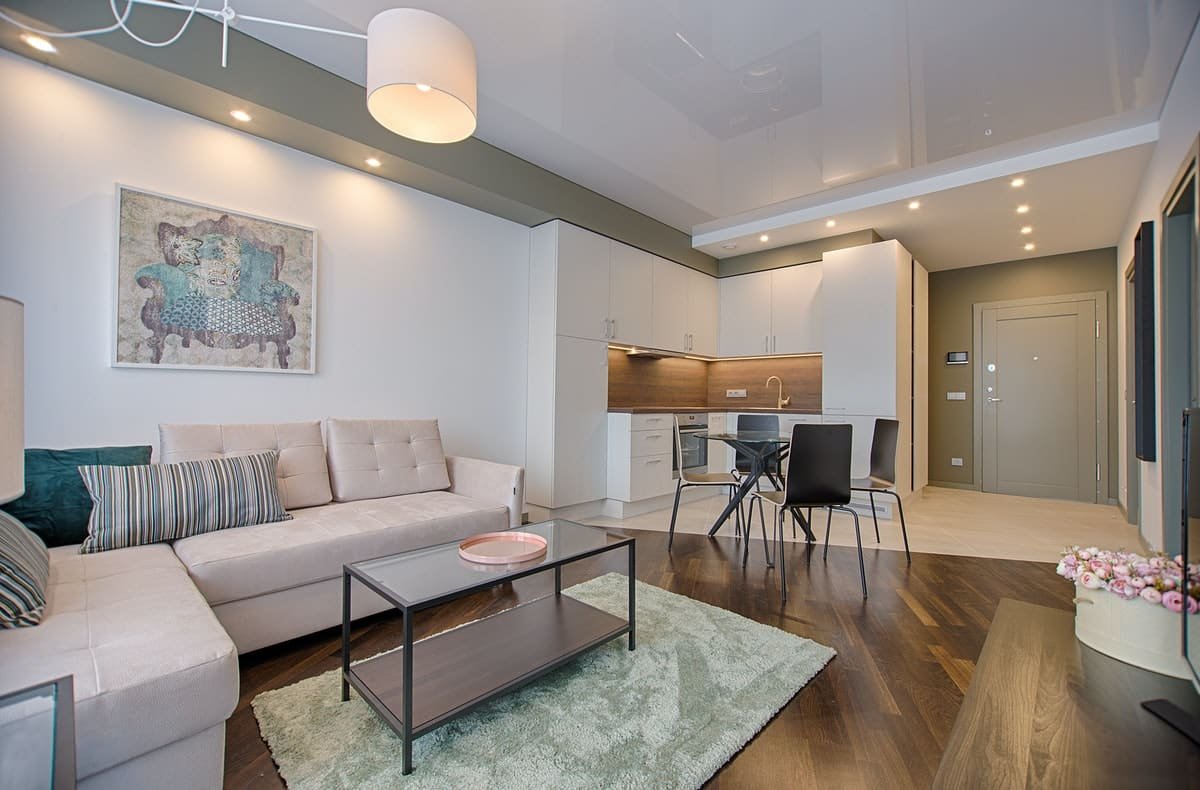

A bright workspace, a factor in employee well-being
Offer your employees good working conditions and they’ll be happy. Their well-being inevitably depends on good lighting. Lighting plays a role in the production of serotonin, the good mood hormone. This means that if you work in a poorly lit room with dark areas, your employees are more likely to become depressed. Poor lighting can also affect their sleep and be a source of fatigue.
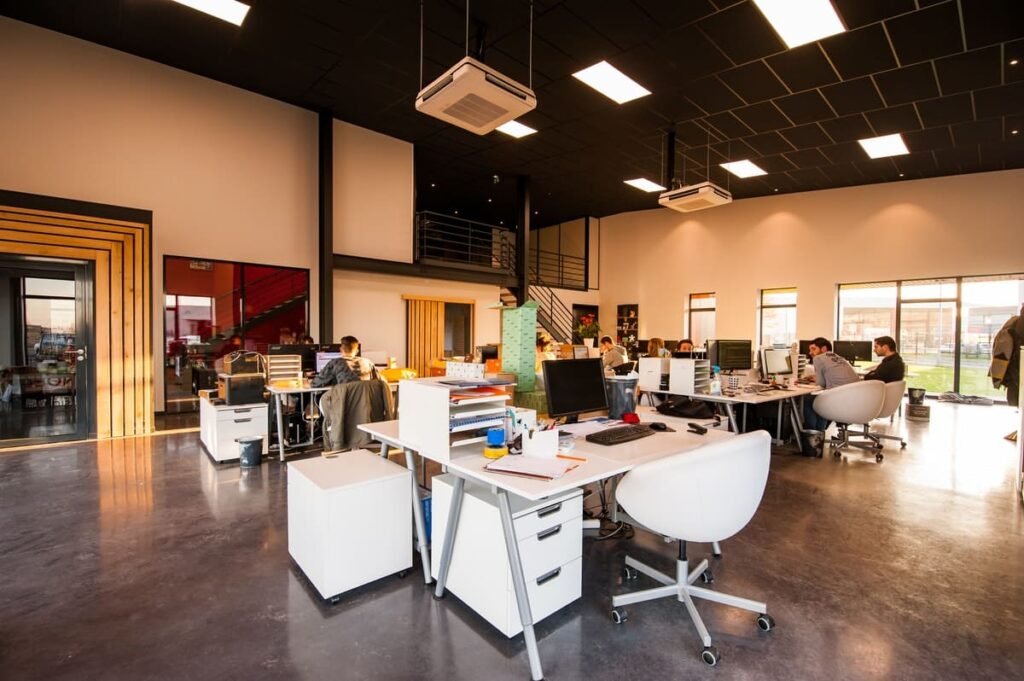
Light also helps to create a friendly atmosphere in open-plan offices. It also optimises workers’ visual comfort . It is important, however, that it is used in the right proportions to avoid glare. It also enables them to move around your premises comfortably.
What can you do to keep your offices bright?
The amount of light in open spaces and meeting rooms depends on a number of factors:
- their configuration and surface area
- natural light
- the atmosphere to be created
- the furniture
- the design style: modern, minimalist, industrial, high-tech, avant-garde, etc.
Nor will it be the same in the presence of glass or solid walls. Solid furniture is more likely to absorb light than glass tables.

What are the rules?
All workstations should have an illumination level of 500 lux. It also needs to reproduce the natural brightness of the sun, which is why the lamps that light your room will often have a neutral white glow. Their colour temperature will then be around 4,000 Kelvin. However, this is not a general rule. Some people prefer a warmer but cooler light, and opt for 3000k or kelvin. These choices need to be discussed and tested. Our test luminaires will help you to validate your options and your desires.
Your luminaires must also faithfully bring out the colour of each object, which is why it’s important to know their colour rendering index. There are LEDs that can distort colours. In a room where various samples are handled, this information will be crucial.

What types of lamp need to be installed?
An open office can be lit by several types of lamp: floor lamps, recessed ceiling lamps, pendant lamps, spotlights, spotlights, wall lamps, etc. The lighting can also be direct or indirect. If your employees work at a computer, the norm is for between 10% and 20% of the light to be direct. Indirect lighting should provide 80-90% of the light.
Direct lighting
Here, luminaires will point their beam at objects that need to be highlighted, such as plants, decorative accessories, a notice board and so on. A lamp can also be fixed above the table of people who need more light to see every detail of their work, such as architects. It should be positioned so as not to dazzle them or create shadows. It is also a good idea to place floor lamps between the desks to optimise employee comfort.
Indirect light
Its purpose is to illuminate a room as a whole, with the added benefit of improving workers’ visual acuity. The luminaires cover a larger surface area and, what’s more, they don’t produce dark spots in your rooms. Some solutions allow you toadjust the level of brightness to suit your needs. If your employees work at night, they will be able to dim the light so that it is relaxing for the eyes and the body.
Why entrust your made-to-measure project to a professional like Rodalight?
Calling in an expert will enable you toilluminate your business premises exactly to your requirements. No detail will be left to chance. This specialist will also make the right choice of lamps to match your decorating style.
He can also help you optimise energy efficiency by installing LED equipment. He can also set up an intelligent system to help you save energy: if sensors detect that an area is unoccupied, they will automatically switch off or dim the lights.
In short, don’t neglect the lighting in your open-plan offices. By working in a welcoming environment, your employees will be more productive and will rarely be absent. Your staff turnover will also be reduced.
Rodalight is here to support you, so why not take advantage of our expert advice!