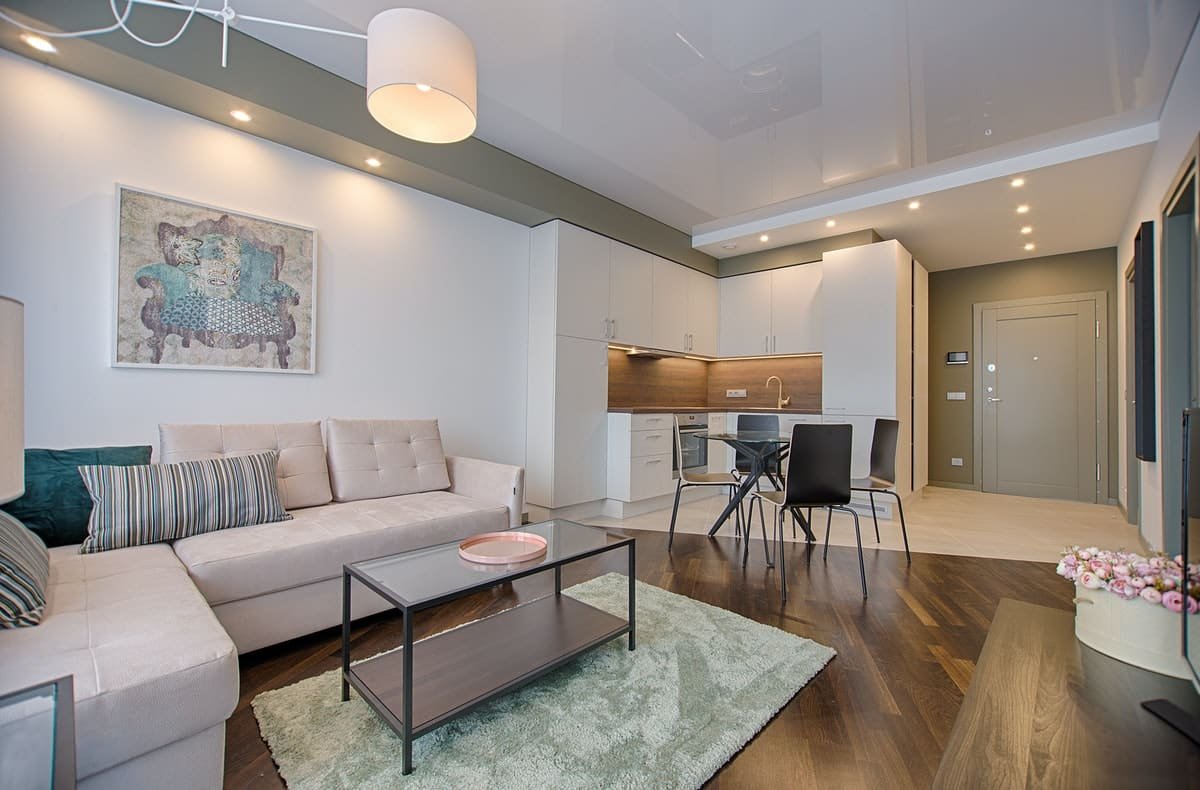

Lighting transforms a space: it enhances volumes, creates atmosphere and has a direct influence on visual comfort. Yet the same mistakes are often made, whether in a residential interior or a professional project. Here are the 5 most common mistakes – and above all, how to avoid them.
Mistake 1: choosing the wrong type of luminaire
Mistake: replacing a light fitting without thinking about its function. A decorative ceiling light cannot replace task lighting and vice versa.
Why this is a problem
The wrong type of luminaire creates either inadequate lighting or an unsightly visual effect (shadows, glare, surfaces that don’t stand out).
What to do about it
- Define the function of each area (reading, cooking, ambience, highlighting) before choosing any luminaire.
- Favour modular solutions: directional spotlights for task lighting, suspended luminaires for atmospheric lighting, LED ribbons for accent lighting.
Mistake 2. Incorrect positioning of sources
Mistake: placing luminaires at random or too close to walls and objects without thinking about the overall effect.
Why this is a problem
Positioning influences shadows, reflections and the perception of volume. Poor positioning can make a room look dull or cause annoying glare.
What can be done about it?
- Vary the heights of suspended, floor-standing, wall and recessed lamps to superimpose layers of lighting.
- Avoid direct lighting of non-diffused reflective surfaces.
- Test each source separately to assess its impact before final installation.
Error 3: Inadequate light intensity
Error: too much or too little light. Many people confuse “brighter” with “better lit”.
Why this is a problem
Incorrectly adjusted light levels strain the eyes and destroy the atmosphere. On the other hand, the right intensity improves functionality and visual comfort.
What to do about it
- Use dimmable luminaires to adjust intensity according to use and time of day.
- Refer to the recommended lux values: 300-500 lux for a kitchen, 100-200 lux for a living room, around 500-800 lux for an office.
Error 4. The wrong colour temperature
Mistake: using the same shade of light throughout the house or premises.
Why this is a problem
Colour temperature (in Kelvin) influences the perception of spaces and materials. Light that’s too cold makes a space look impersonal, while light that’s too warm makes it look yellowish.
What to do about it
- Choose appropriate temperatures: 2700-3000 K for relaxation areas, 3500-4000 K for work areas.
- Check the Colour Rendering Index (CRI): choose a CRI ≥ 90 for accurate rendering of colours.
Error 5. Forgetting lighting scenarios
Mistake: using a single lighting circuit for all situations.
Why this is a problem
Without scenes, lighting does not adapt to the time of day or to activities. You lose comfort and energy efficiency.
What can be done about it?
- Provide several circuits: general, task and accent lighting.
- Install a variety of controls: multiple switches, dimmers or simple home automation scenarios.
Pre-installation checklist
- Have I defined the function of each zone?
- Are the luminaires chosen appropriate (luminous flux, CRI, angle)?
- Are they positioned to avoid glare and reflections?
- Is the intensity adjustable?
- Are at least two lighting scenarios planned?
In my opinion
Most lighting mistakes are the result of a lack of global thinking: we often choose a lamp for its style, not for its function. Yet good lighting structures a space just as much as well-chosen furniture. By taking a little time to anticipate needs, intensities and colour temperatures, you can achieve a result that is beautiful, functional and long-lasting.