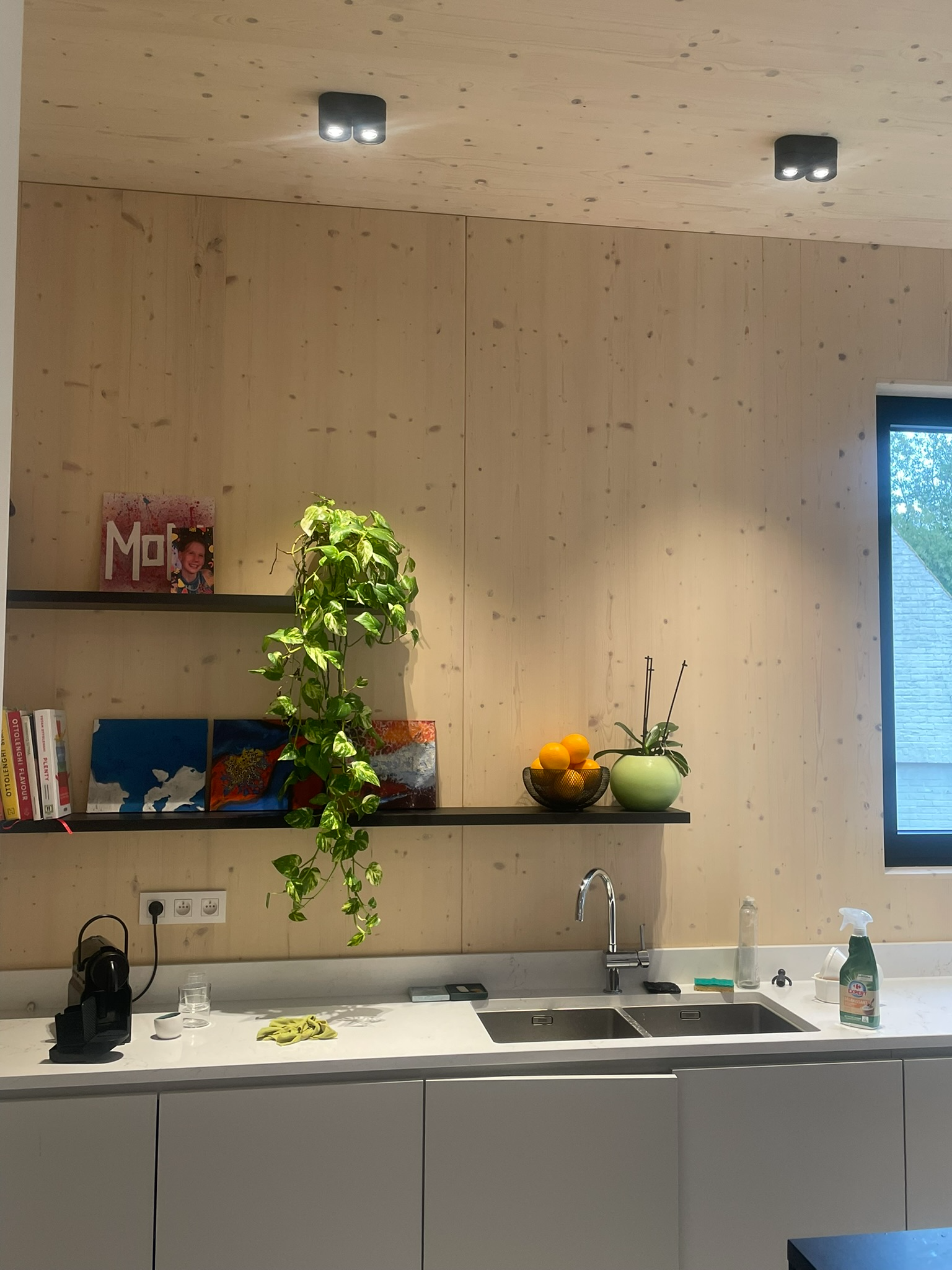

Whereas halogen bulbs consume an enormous amount of energy and produce considerable heat, LED bulbs can reduce this consumption by 85-90% while greatly reducing heat emissions. At the end of the 1990s, incandescent bulbs were replaced by so-called “low-energy” halogen bulbs (ES for Energy Saver), but their real savings were often no more than 10 to 15%.
Although advertised as being more economical, these halogen lamps quickly proved obsolete in the face of LED technology, which offers much greater energy efficiency and is perfectly compatible with the majority of existing luminaires.
A very rapid return on investment
Switching to LEDs is both environmentally friendly and financially profitable. By replacing your old fixtures and halogen bulbs with LED models, you immediately reduce your electricity bill, while benefiting from a much longer lifespan.
Depending on the model, LED lights operate for between 50,000 and 75,000 hours – compared with just 2,000 hours for a conventional halogen bulb. On average, this means ten to fifteen times fewer replacements, and the same amount of savings in the long term.
Another advantage is that most LED bulbs can be installed directly at 230V and can last from 15,000 to 30,000 hours without a transformer. This ease of installation goes a long way to explaining their success in residential and commercial lighting renovation and modernisation projects.
Efficient, comfortable lighting
Contrary to popular belief, LEDs have nothing on halogen when it comes to light output. Thanks to technological advances, they now offer uniform, stable, flicker-free light. The choice of colour temperature allows you to adapt the lighting ambience to the space in question: warm white for a soft atmosphere, or neutral white for work areas and retail outlets.
LED bulbs also have an excellent CRI (Colour Rendering Index), guaranteeing faithful reproduction of colours and greater visual comfort, particularly in areas where colour accuracy is important (shops, design areas, offices).
Choosing the right LED equipment
Before replacing your old bulbs, it’s essential to check a few technical criteria to ensure optimum results:
- Power and luminous equivalence: check the flux in lumens rather than watts; an 8W LED can replace a 60W halogen.
- Colour temperature: warm white (2700K or 3000K) for living areas, neutral white (4000K) for business areas, cool white (6500K) for technical areas.
- CRI: choose a CRI above 80 for natural light quality. It is even possible to obtain 90 CRI luminaires at no extra cost.
- Lifespan: between 20,000 and 50,000 hours depending on the model and conditions of use.
- Dimming: choose compatible models if you want to keep a dimmer.
- Shape and base: make sure you choose the right format (E27, GU10, G9, etc.) to avoid incompatibilities.
Tangible long-term savings
The price of LED bulbs has fallen considerably in recent years, making LED relamping (the gradual replacement of existing lamps) accessible to everyone. With their low cost, durability and reduced electricity consumption, the return on investment is often achieved in less than a year, especially for intensive use.

In a nutshell
- Up to 90% energy savings compared with halogen lamps
- Lasts up to 25,000 hours
- Instant start, with no warm-up or flickering
- Wide choice of white shades and excellent colour rendering
- Easy to install on most existing luminaires
Replacing halogen bulbs with LEDs combines performance, comfort and durability. Whether for homes, shops or offices, LED technology is now the most efficient and responsible lighting solution.